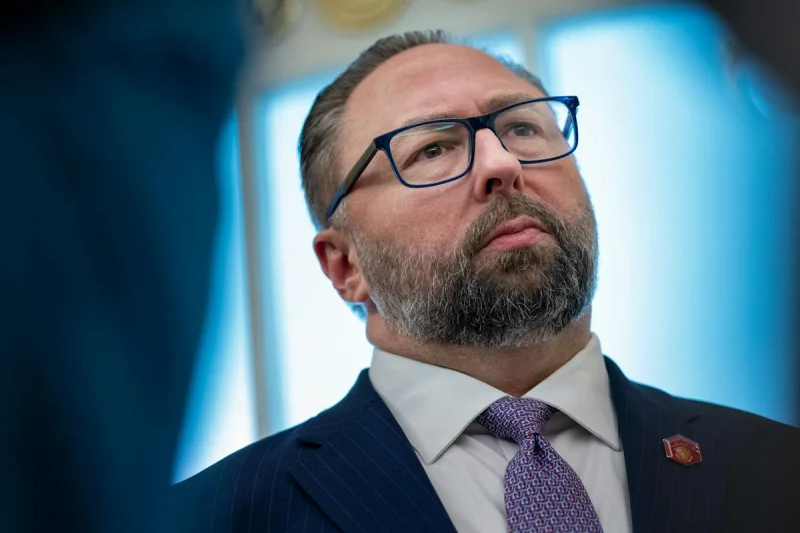
Jason Miller told a court in a sworn child custody filing that he brought in $15 million in the 12 months ending in September 2026 while describing himself as an unpaid White House employee. In the same affidavit filed on November 3, he listed his employer as The White House and wrote his pay rate as unpaid employee.
The filing has become the focus because Miller’s income was not small change. The Washington Post reported that he made more in that period than he had made in the previous seven years combined, even though his public lobbying and foreign-agent filings account for only about $2.4 million over the past two years. He was also registered as a foreign agent of India and Romania during this time, and bank records showed that his consulting firm kept taking in $1.3 million from July through September.
Most of the money he reported came through his two firms, SHW Partners and Scipio Strategic. Scipio took in $6.7 million, but it does not appear in any of his foreign-agent filings. The bulk of the income came from SHW Partners, which received large payments from the Indian government, the hedge fund Bridgewater Associates and Skydance as the media company was lobbying the White House to approve its merger. Miller also received a $100,000 fee from Semafor for consulting on guest bookings.

That picture sits uneasily beside the status he claimed under oath. Less than a month after the affidavit, the Trump administration said Miller was never a special government employee at the White House. He had also been reportedly in talks this past summer to join the White House as an unpaid adviser, a detail that makes his sworn statement harder to read as a harmless formality and more like a claim that now needs explanation.
The custody case gives the disclosure added weight because it is tied to the child from the relationship that surfaced when Miller withdrew after his affair with a campaign staffer came to light. He served as Trump’s 2016 campaign spokesman, then as a senior adviser on Trump’s two subsequent presidential campaigns, and later was appointed White House communications director in Trump’s first term.
What remains unanswered is straightforward: if Miller was not a special government employee, what work, if any, did he actually perform for the White House while calling himself an unpaid employee? The filing lays out the money. It does not settle the status he claimed, and that gap is now the story.