At least 109 freshmen will hold seats in the U.S. House of Representatives when January 2027 arrives, giving Congress its largest new-member class in at least three decades. The count is still not final, with two more members to be elected in Louisiana runoffs on Dec. 12 and three additional races unresolved.
That is the answer to the question many are asking now: how big did the 2026 House shake-up become? It became large enough to remake the chamber in a single cycle, and it did so with more than 40 new Democratic members who are political newcomers. By the article’s definition, political experience means having been elected to any public office before, which makes the size of this class more striking than the raw total alone suggests.

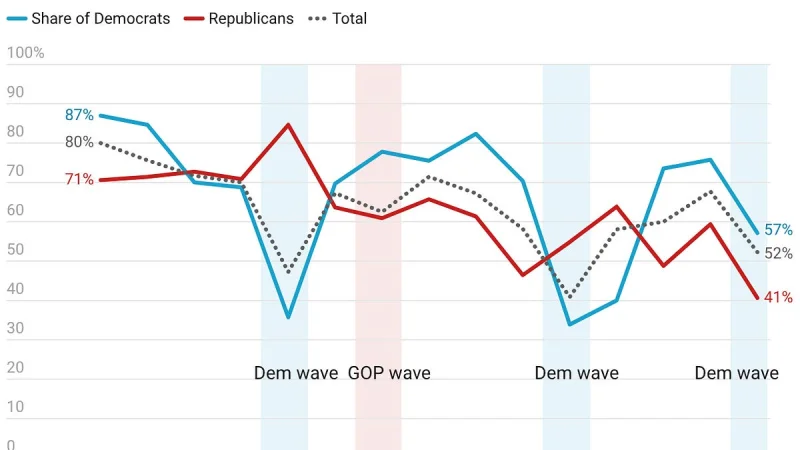
The previous high-water mark in the last three decades was 2010, when 96 newcomers entered the House. This cycle has already gone past that by a wide margin, and the broader pattern is even more unusual. Since 2016, an average of 81 freshmen have been elected each year, well above the average of 58 from 1998 to 2016. The pace of change is one reason the chamber is heading into January with so many first-time members.
But the turnover is not only about Democratic gains. A record number of members left the House on their own this year, and Republicans account for much of that movement. Of the 75 GOP members who will be leaving their seats so far this year, 17 retired and 20 chose to run for another office rather than seek reelection. Only 38 Republican incumbents actually lost an election for the House in 2026, which means many of the open seats were created before voters cast their ballots.
That is the part that complicates the cleanest version of the story. The scale of the freshman class reflects a big electoral shift, but it also reflects a wave of voluntary departures that changed the map before Election Day was over. In all, 61 members voluntarily left their seats this cycle, a sign that the churn was already building before the final results settled in. Even after the Louisiana runoffs, the unresolved races and the final total will only sharpen what 2026 already made clear: the House is entering January 2027 with an unusually large share of newcomers and a level of turnover not seen in decades.