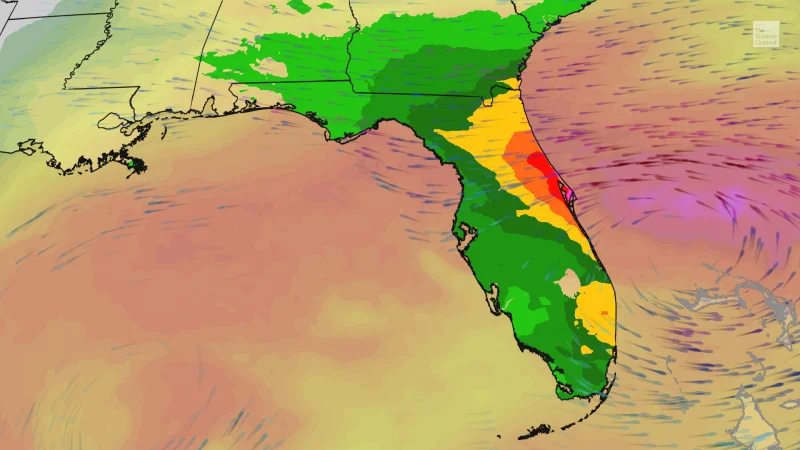
Florida is headed into a very wet late half of the week as a slow-moving low pressure system crosses the peninsula and pushes toward the far western Atlantic. The setup is already raising flood concerns along Florida's Atlantic coast, with the heaviest rain expected through Saturday on the state's East Coast.
That is why Florida weather flooding is drawing attention now. NOAA's Weather Prediction Center issued level 3 out of 4 flood threats for parts of the Atlantic coast on Wednesday, and Friday is expected to bring the highest flood worries of the week. Showers and thunderstorms should stay sporadic through Thursday, then grow in coverage and last longer into Friday as persistent onshore flow keeps feeding moisture into the coast.

The rain threat is broad enough to cover a large section of the Space and First coasts, including Orlando, Melbourne, Palm Coast and Jacksonville. Longer periods of heavy rain are possible there, and the heaviest rainfall through Saturday is expected between Jacksonville and Port St. Lucie. At least four inches of rain is anticipated through Saturday, and some communities could see more than a foot.
The part that makes this notable is the timing. Florida's dry season is supposed to run from October through May, yet this system is set to bring flooding during that stretch. The pattern can still deliver rain when El Niño is in place because it is likely to make rainfall amounts more like the middle of thunderstorm season during the winter months.
There is still a gap between the warning and the outcome. The National Hurricane Center is watching the system, but the low pressure area is only expected to form near the surface east of Florida by late Friday or early Saturday, and it has a low chance of being named Subtropical Storm Kyle by this weekend. That leaves the key question not whether Florida gets wet, but how hard the rain hits each community before the system finally moves on.