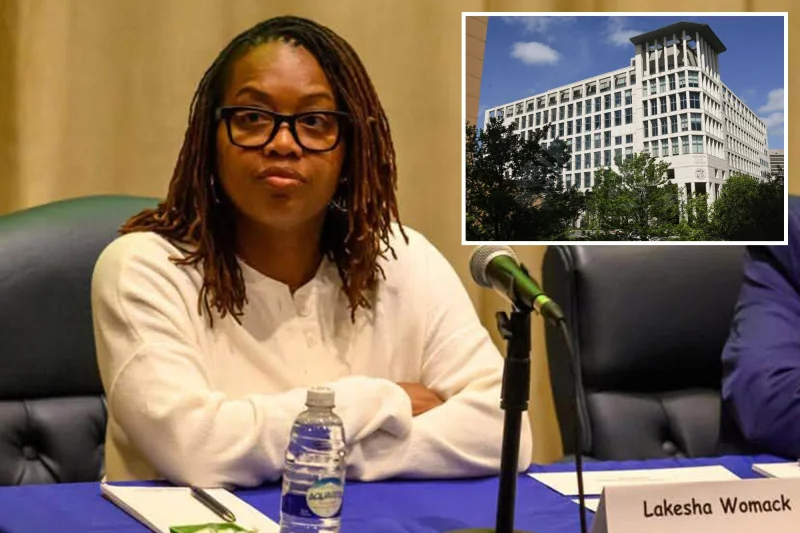
LaKesha Womack unseated Tim Moore in North Carolina's 14th Congressional District on Tuesday, ending his run after one term even though he raised about $3 million to her $59,000. She won by about 6,400 votes, a result that turned one of the state's most lopsided money races into one of its sharpest upsets.
The contest drew attention because Moore had helped redraw the district in 2023 and then carried it in 2024 by about 16 percentage points. This time, the money gap was even wider than the politics suggested. Womack's campaign was outspent by more than 50 to 1, yet she still found a path through a district that stretches from the suburbs of Charlotte to the Western North Carolina mountains.
Womack said she spent much of her time on the road, attending between five and seven events per week. She said, "A lot of that money was spent on gas," and added, "I made sure that I showed up everywhere across this district." That kind of retail campaign may have mattered in a race where the final margin was smaller than the financial gap, and where personal contact appeared to count more than ads.

Moore's loss also fits into a larger political shift in North Carolina. Democrats flipped at least five and potentially six Republican-held seats in the state, won a majority in the state House for the first time since 2010 and broke Republicans' veto-proof supermajority in the state Senate. Former Gov. Roy Cooper also defeated Michael Whatley in the U.S. Senate race, giving Democrats another high-profile win on a night when the party ran well across the state.
Exit polling from NBC News pointed to the backdrop. Three-fourths of voters rated the economy as poor or not so good, and 65% said President Trump's policies had made the economy worse. Mike Marinelli called it "a total wipeout across the board," and said it was "a total referendum on the president and voters being livid about the prices, the war and immigration."
The result leaves Moore, who had served for more than two decades in the North Carolina House and held the longest ever stint as speaker of the state House, on the outside after a race he once seemed built to win. Womack said her victory was "a testament to the power of ordinary people who believe that their voices matter and that leadership should be rooted in service, accountability, and opportunity for all." What she proved is that in this district, a candidate with far less money could still beat a better-funded incumbent if enough voters were ready to move on.