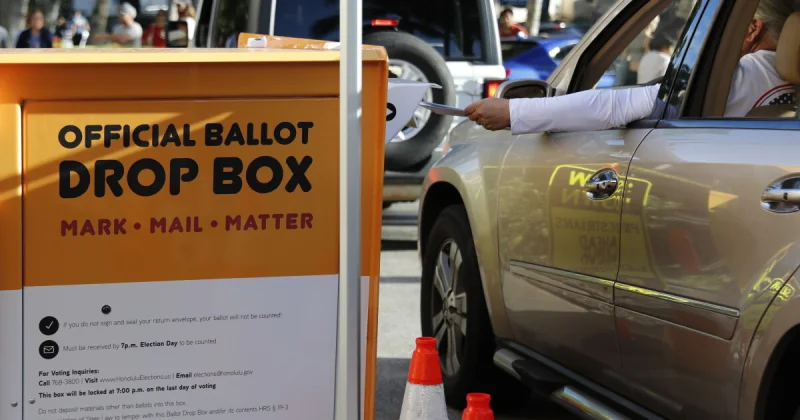
Hawaiʻi voted Tuesday in its mid-term general elections, with Republicans trying to turn last year’s small gains into something larger at the Capitol. Hawaiʻi's Office of Elections expected to release results Tuesday evening, after the last person in line at voter service centers had cast a ballot, and anyone still waiting at 7 p.m. was allowed to vote.
The stakes were not abstract. The GOP picked up three seats in the state House and one seat in the Senate in 2024, and it now holds 10 of 51 House seats and three of 25 Senate seats. This year’s returns were expected to show whether that break in Democratic control was a one-time bump or the start of a longer shift.
Because Hawaiʻi votes by mail, many ballots were already in before Election Day, making the final stretch more about turnout than spectacle. Results were due Tuesday evening, but the shape of the map was already visible in the places both parties were watching most closely: Mililani, Waipahu and ʻEwa Beach in the Senate, and Hawaiʻi Kai, Moanalua and Oʻahu's North Shore in the House.

The clearest test of that balance may come in West Maui, where an unusual three-way race could send the first Green Party candidate to the state House. Elle Cochran, the Republican incumbent, was last elected as a Democrat before switching parties in March. She missed 51 of the last legislative session's 60 days and said she was needed more in her district helping Lahaina fire survivors than in the Capitol. Sne Patel, the Democratic candidate, worked in Lahaina restaurants and art galleries and served on boards and commissions. Paʻele Kiakona, the Green candidate, is a leader of Lahaina Strong, the community group that led housing protests after the 2023 Maui wildfires, and he won major union endorsements from the International Longshore and Warehouse Union and the Hawaii Government Employees Association.
That race captures the split running through the night. Colin Moore said Republicans were likely to lose ground in the islands compared with 2024 because President Donald Trump was not on the ballot, and he said some people who showed up for Trump in the presidential election would not vote this year. Beth Fukumoto countered that Republicans could still expand if voters aimed anger over the high cost of living and bribery indictments at Democrats who control Hawaiʻi's executive and legislative branches. Moore also noted that ballot returns had been lower than in the last mid-term in 2022 and that many races were effectively decided in the primary, while voters were also weighing multiple ballot measures at the state and county levels, including 20 in Honolulu.
That makes Tuesday night less of a simple count than a read on whether 2024 was a floor or a ceiling for Republicans. If turnout stays soft without Trump on the ballot, the GOP’s gains may prove fragile. If anger over prices and the indictments carries more weight, Republicans could leave Tuesday with a larger foothold in the Legislature than they brought into it.