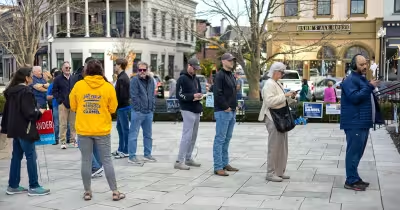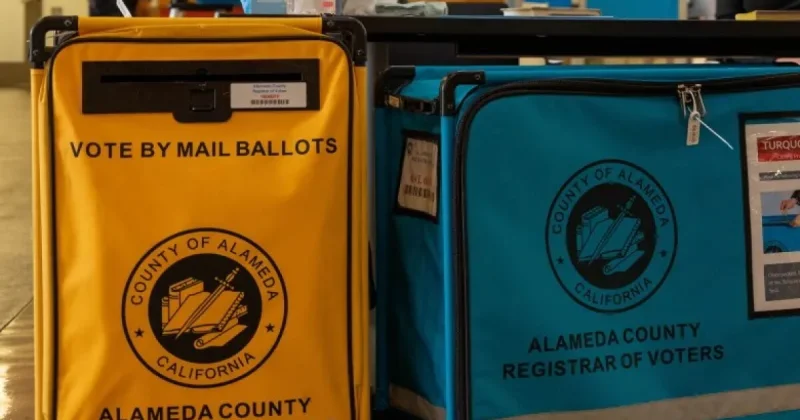
Early election returns in California can make Republicans look stronger than they really are. In close races, the first numbers can put a GOP candidate ahead, only for later counts to move the result toward Democrats.
That is why the search for Are Republicans red or blue is really a search for what California’s vote count means on election night. The answer changes depending on when the ballots are opened and counted, and in a state with 23 million registered voters, the first reports rarely tell the full story.
Experts have described that pattern for years as a blue shift or a red mirage. It is not a sign that California Democrats are finding votes or rigging elections. It is a counting pattern built into the way ballots arrive and are processed, and it has been discussed since at least 2013.
That pattern became especially visible in 2020, when election night returns showed Donald Trump leading Joe Biden in several key states before Biden later won the Electoral College states he needed. California has produced the same kind of result in its own races. In 2018, four Republican candidates for the House of Representatives looked ahead on election night, then lost after all votes were counted.

The same thing happened in the June LA mayor’s race, where Spencer Pratt appeared to be beating Nithya Raman in early returns. Raman later pulled ahead and advanced to the general election to face Karen Bass. Pratt’s early lead fit the same script seen again and again: Republicans can look ahead first, then lose ground as later ballots come in.
The reason is timing. The city’s Republicans turned their ballots in earlier than Democrats in the June LA race, which helped create the early Republican lead. Los Angeles County also had nearly 6 million registered voters, and California as a whole has 23 million. With totals that large, election officials can need weeks to finish counting, especially when ballots arrive after election night and must still be verified.
That lag has created room for suspicion, especially when early numbers are taken as final. Trump called the LA mayor race results rigged, a charge that fits the same kind of reaction that has followed other close California counts. He also used the language of finding votes, even as later tallies moved in the opposite direction.
The deeper problem is not mystery. It is math. California is large enough, and its voting habits are split enough, that the first tranche of ballots often skews one way while the rest shifts the other. Los Angeles County had the most Trump voters by raw number in 2020, even though Biden overwhelmingly won the county. That mix is exactly what makes early returns misleading.
So the short answer is this: early California returns can lean red, but the final count often turns blue. The state’s results can take weeks to settle, and anyone treating the first report as the last one is reading the race before most of the ballots have even been counted.