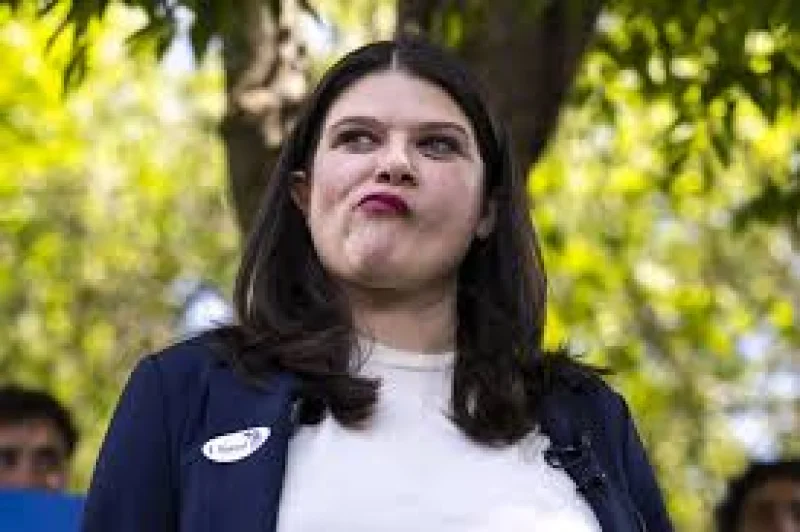
Haley Stevens rescinded her endorsement of Abdul El-Sayed and backed Republican Mike Rogers in the Michigan Senate race, and the switch landed hard among Democrats who had counted on her support. By Monday, the reaction in Detroit was sharp enough to turn the move into its own story.
The backlash has been personal as much as political. Patricia Coleman-Burns said people were hurt by Stevens’ decision, and said some Black women voters had called her after the reversal. She said parents were telling their children to get to the polls after Stevens endorsed Rogers, then added, “And I venture to say, it’s to vote for Abdul.” That is the part that makes the endorsement change matter now: instead of pulling wavering voters away from El-Sayed, it appears to have pushed some of them toward him.

Stevens has represented Michigan’s 11th Congressional District since 2019, and her shift came after Chuck Schumer had backed her in the primary. Schumer called her move a “despicable betrayal,” a sign of how sharply the Democratic establishment sees the break. For voters who had treated Stevens as a reliable ally, the reversal was not just disappointing; it felt like a line had been crossed in public.
Anne Soffin captured that feeling in personal terms. She said, “Haley was my camper. I was her counselor. She was 9 years old, and I was 18.” Soffin said she had supported Stevens in the primary and donated to her campaign, but after seeing the news she left the Senate race blank on her absentee ballot. “I saw, like, two headlines, and I shut my phone off,” she said. “I was absolutely beyond stunned.”
Soffin said she opposed Abdul El-Sayed but could not bring herself to vote for Rogers, either. “I’m embarrassed for her,” she said, before adding, “I can’t be in her corner. I just can’t.” That leaves Stevens in a difficult place: she has already alienated some of the Democrats and longtime supporters who once stood with her, and the full cost of the switch will not be measured until ballots are counted and turnout is in. The unanswered question now is not whether the endorsement caused a reaction, but how many voters will carry that reaction all the way to the polls.