

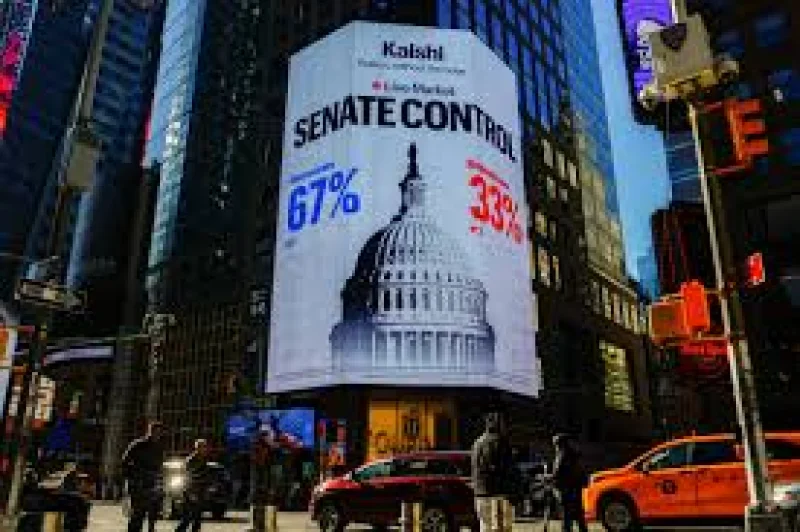
has published Judith Levine’s sharp critique of election prediction markets, arguing that platforms like Kalshi and Polymarket sell the idea of crowd wisdom while a narrow slice of traders takes most of the money. Levine says the sites can shape how voters think about election outcomes without making them any smarter about whom to choose.
That argument lands now because prediction markets are back in focus ahead of Polymarket Midterms coverage, and because the latest claims about their accuracy are hard to ignore. A 2025 Vanderbilt University study found Polymarket was more accurate than polls, especially in swing states, and market boosters point to that record as proof the prices reveal something real. Kalshi has made the same case, with a spokesperson telling, “This data is bottom-up, not elites-driven,” and adding that prediction markets are “a way to see what people are saying when there’s money on the line.”
Levine does not dispute that the markets can be informative. She argues that the information mostly comes from a tiny group of persistent winners. A working paper from scholars at London Business School and Yale University found that almost every wagerer’s results were no better than chance, and that the accuracy came from around 3% of accounts. In other words, the crowd generates most of the volume but little of the information.

That gap matters because it changes the way the markets should be read. If the median user is not beating chance, then the average trader is not buying a forecast so much as paying to participate in someone else’s edge. The article says these markets present themselves as honest and transparent, yet they also open the door to fraud and insider trading, which is a dangerous mix for products marketed as a cleaner alternative to old political guessing games.
The money trail is even starker. A analysis found that casual traders were bleeding cash while a small number of sophisticated pros ate their lunch. Those traders react quickly to public and financial news, gather poll data, buy access to big data streams that can cost $200,000 annually, and use algorithms to predict price moves and manage risk faster than any human. They can make tens of thousands of trades a day. The Journal found that three-quarters of the profits went to 0.1% of the accounts, and that of at least 2.3 million accounts on Polymarket’s site, just 2,000 netted almost half a billion dollars.
For ordinary users, that is the uncomfortable core of the business. The markets may occasionally call an election better than polls or pundits, but the gains are concentrated enough to make the phrase “crowd wisdom” sound generous. Pew Research said the median Polymarket user placed 46 trades across 10 active trading days in 2026, a reminder that most people are dabbling while a few professionals are running a very different race. The unanswered question is not whether Polymarket can be right. It is whether its headline accuracy is really a public good, or simply the byproduct of a market built to reward the few who know how to win it.