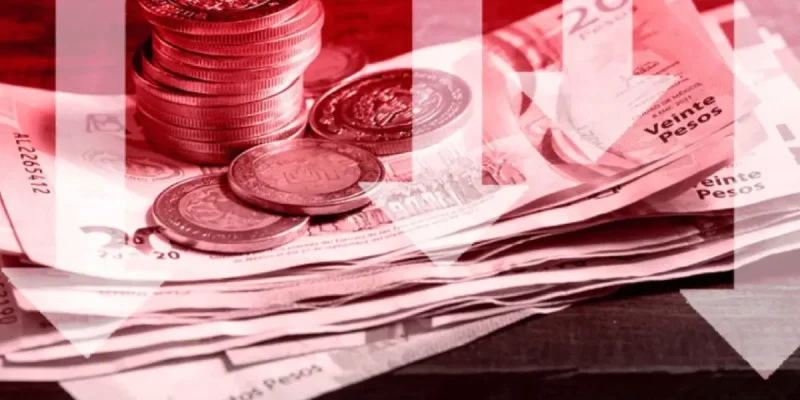
The peso closed Friday at 18.6601 per dollar, even after edging higher on the day, and still finished with its seventh consecutive weekly loss. It moved from 18.7134 on Thursday, a gain of 5.33 centavos, or 0.25 percent, but the week ended with the currency weaker than it was seven days earlier.
That is why the search around dollar price today in Mexico is focused on the same number traders are watching: the peso is no longer just drifting, it is working through a sustained slide. Over seven straight weeks of losses, it fell from 16.8912 per dollar on 4 September to 18.6601 on Friday, a drop of 1.77 pesos, or 10.47 percent. In that span, the currency also closed the previous Friday at 18.5045 per dollar, showing that the rebound on Friday did not erase the broader trend.

The session itself was active. The peso traded between 18.8079 and 18.6424 before settling at the close, while the DXY rose 0.19 percent to 101.80 points. Markets were waiting for the Reserva Federal to announce policy next Wednesday, with the Fed widely expected to keep its key rate in the 3.75 percent to 4 percent range. Traders are also looking further ahead to December, when a 25 basis point increase is expected after the Fed raised rates by 25 basis points the previous month.
Felipe Mendoza laid out the near-term ranges that have become the market's reference point. If August growth is absorbed positively and bilateral tariff relief with Estados Unidos keeps moving forward, he sees the peso testing 18.52 to 18.60. If global fear returns, defensive dollar buying picks up, or U.S. Treasury yields turn higher again, he expects a rebound that would put 18.75 to 18.85 back in play. Those are tight bands, but they show how quickly the currency can swing when the dollar strengthens and uncertainty rises.
The friction is that Friday's gain came inside a much larger slide. The peso's weakness has coincided with concerns about inflation, interest rates and the narrow cushion that had supported the currency before the recent move lower. At the same time, the IGAE rose 0.6 percent month over month in August and 3.3 percent year over year, numbers that help explain why the market is balancing local growth against the coming decision from the Reserva Federal. For now, the next clear marker is Wednesday, and whether the peso holds near Friday's close or moves back toward Mendoza's lower band will depend on how traders read that announcement.