Brad Keselowski brushed off the latest buzz around his shop rules at RFK Racing, reacting after anonymous employee comments about the team’s culture made the rounds. His response was short and pointed: “Didn’t know so many people loved hoodies,” he wrote on X.
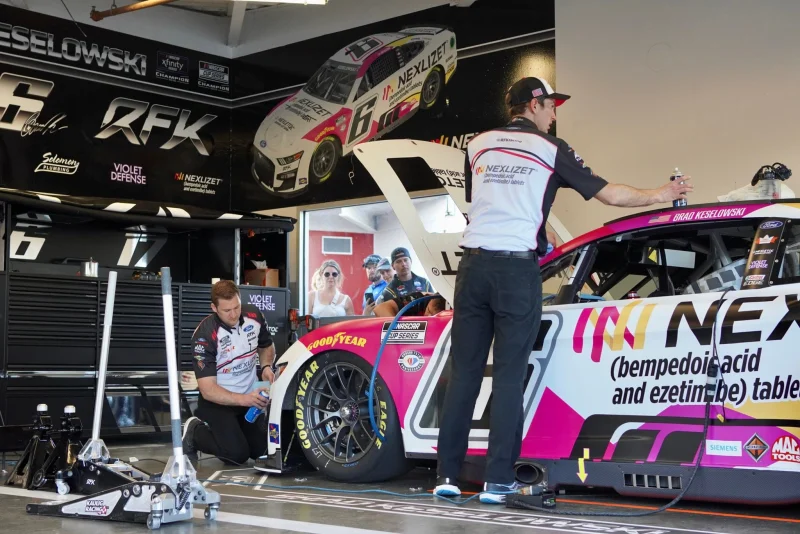
The remark landed now because the criticism was not really about fabric. Employees at RFK Racing were described as working under a no-hoodie rule, with white walls throughout the shop and team-themed computer wallpapers, details that turned a workplace habit into a public debate about how Keselowski runs the place. The comments were published by Jeff Gluck and Jordan Bianchi, and they quickly put the co-owner’s style under a brighter light than a dress code usually gets.
That matters because Keselowski is not just any driver voicing an opinion about a team shop. He is a 36-time winner and a co-owner of RFK Racing, and his role has been tied to a broader effort to change the feel of the organization. Since he joined in a driver-owner role, RFK has won seven NASCAR Cup Series races after going without a single win between 2018 and 2021, a stretch that gives his approach more weight than a quirky office rule might suggest. Earnhardt put it plainly on The Dale Jr. Download: “What Brad was trying to accomplish, he accomplished,” and added that the shop had once looked like a place where “the floors were dirty” before it was cleaned up and repainted to build pride.
There is still a mismatch inside the story. RFK wanted Keselowski to move from his driver role into management after 2026, but he plans to keep driving for several more years, and he is already searching for a new ride for 2027. That leaves his future split between the track and the desk, with the same question hanging over both: how much of RFK should be shaped by the person still expected to race it.
Hamlin, another team owner, drew the contrast in his own way, saying his team has encouraged people to dress casually and that he and Keselowski simply have different methods. That is where the hoodie debate ends up: not as a verdict on one rule, but as a window into two competing ideas of what a race shop should look like when the person setting the tone is still planning to drive for years to come.