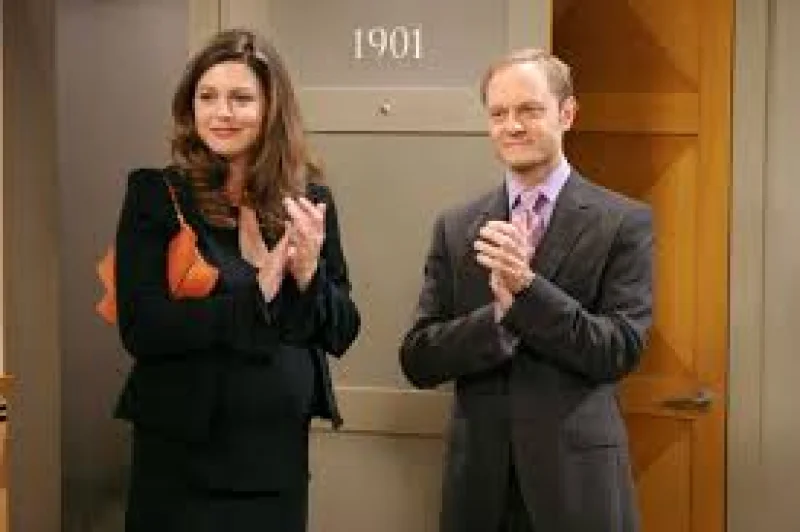
Jane Leeves says the one Frasier story she wishes had been handled differently was the way the show hid her first pregnancy. Instead of writing it into the plot, the series gave Daphne Moon a weight-gain storyline and sent her to a camp.
The reason people are talking about it now is Leeves’ own retrospective view of a choice that shaped one of the sitcom’s most watched relationship arcs. She became pregnant with her first child, Isabella, ahead of season 8, and when she returned from maternity leave the show explained Daphne’s absence and return by saying she had lost 9 lbs. and 12 oz.
Leeves did not frame the decision as a scandal. She framed it as the one creative call she would revisit. “The only thing I wish had been handled differently was the hiding of my first pregnancy. But those were different times,” she said, adding that Daphne and Niles had only just got together. In her view, the writers likely thought it was too early for Daphne to be pregnant and wanted to keep exploring the relationship before parenthood entered the story. She also said it might have been interesting if Daphne had become pregnant then.

That hesitation sits at the center of the story. Daphne Moon and Niles Crane had spent much of Frasier circling each other, with Niles secretly in love with Daphne for years before the pair finally became a couple. Once they were together, the show chose to preserve that new phase rather than accelerate it into family life. Leeves’ comment suggests that the concealment solved an immediate production problem, but also pushed the characters away from a turn that could have changed their storyline much sooner.
David Hyde Pierce, who played Niles, said he had never considered the alternative. “I’ve never thought of that, Jane, that’s interesting, so off the rails: the idea that we see them run off together at the end of a season and when they come back they’re having a baby,” he said. That reaction underscores how thoroughly the show treated Daphne and Niles’ relationship as something to be stretched, not rushed. What Leeves is left with, years later, is a narrow regret: not that the pregnancy was hidden, but that the choice foreclosed a version of the story that might have given Daphne and Niles a different kind of beginning.
No new twist is waiting after this interview. The question it leaves is cleaner and more interesting: whether Frasier’s writers made the right call in protecting the romance, or whether they passed up the moment when Daphne and Niles could have become parents while the relationship was still fresh.