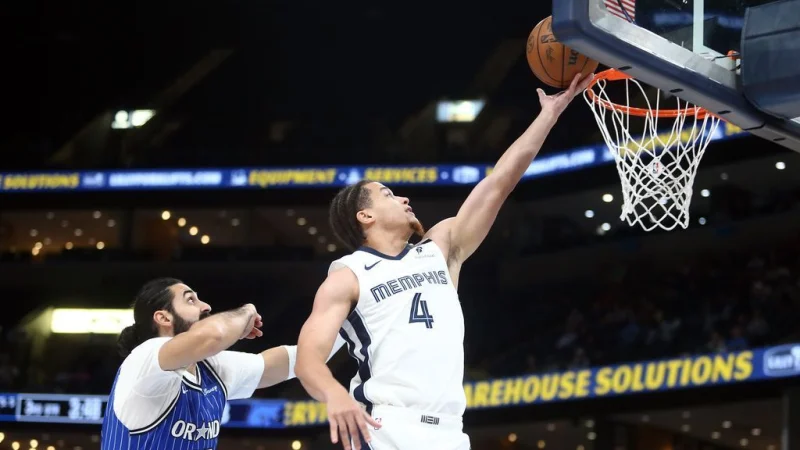
The Dallas Mavericks signed Walter Clayton Jr. to a two-way contract on Wednesday, adding the No. 18 pick in the 2025 NBA Draft after he cleared league waivers. The move gives Dallas a rookie guard who can move between the NBA roster and its development slot, while the team sorts out its backcourt depth.
Clayton’s arrival lands now because he became available only after Memphis waived him on Monday, unable to find a trade partner for the first-round pick it had acquired. Dallas claimed him once waivers passed, turning a brief roster opening into a calculated addition for a team that has been trying to solidify minutes when Kyrie Irving is not on the floor.
The two-way label explains the choice. Clayton can appear in up to 50 games for Dallas this season, but he is ineligible for postseason and play-in games unless the Mavericks convert him to a full-time contract. He also will earn half of the NBA’s rookie-scale salary, a tradeoff that lets the club keep a recent first-round talent without committing a standard roster spot right away.
That fits the shape of Clayton’s first professional season. He played 69 games across the Utah Jazz and Memphis Grizzlies, averaging 7.8 points, 2.0 rebounds and 4.0 assists. For Memphis, he averaged 9.7 points and 5.6 assists in 24 games and made six starts, with the strongest stretch coming late enough to suggest the learning curve had begun to flatten.
Clayton’s rookie year also carried unusual baggage for a player who entered the league as the No. 18 pick. Memphis had him as part of the package it received in the Jaren Jackson Jr. trade, yet it moved on quickly after the draft-night optimism faded and the trade market never produced a deal. Dallas is betting that a player who was the Most Outstanding Player in the 2025 NCAA Men’s Basketball tournament, and who averaged 18.3 points a game while helping the University of Florida win a national championship, still has room to grow into a useful reserve.
The open question is not whether Clayton belongs in the league. It is how much of him Dallas can actually use. If he keeps the role that comes with a two-way contract, the Mavericks get depth and flexibility; if he forces his way into a larger part of the rotation, the next move will be whether Dallas is ready to turn that limited contract into something bigger.