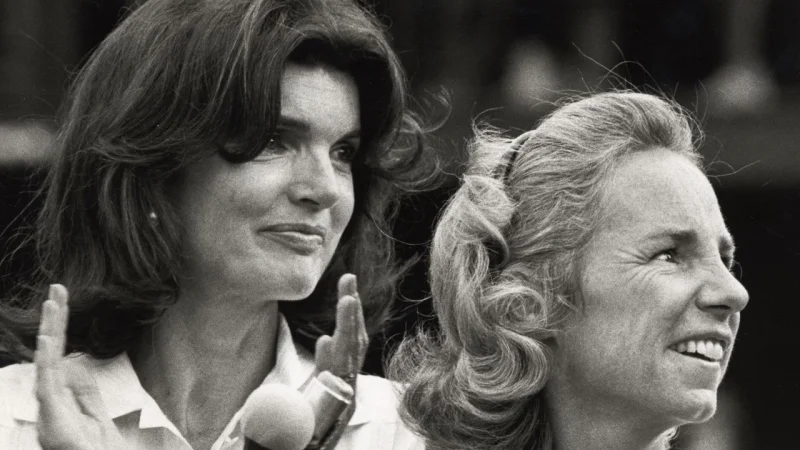
Ethel Kennedy was not just part of the Kennedy circle. She stood with Jacqueline Bouvier as the family story was being written, serving as a bridesmaid when John F. Kennedy married Jacqueline Bouvier in Newport, Rhode Island, on September 12, 1953.
That detail has drawn fresh interest because it puts Ethel Kennedy at the center of one of the family’s most important moments, before Jackie became Jacqueline Kennedy and long before the illness that would bring the two women together again in 1994. For readers searching her name now, the appeal is not only political history but a personal one: how two women with very different temperaments stayed close across decades inside a family that lived much of its life in public.

Their friendship began in the tight social world around S Street in Georgetown, where the family had moved after Daddy started working on Capitol Hill. John F. Kennedy lived with them on weekdays and flew back to Massachusetts on weekends, and Ethel Kennedy described the house as the smallest one you could ever see, though she said, “But we were happy there.” In 1953, she threw a St. Patrick’s Day party, asked guests to dress in black and wore a green chiffon dress herself. About a week later, she and Jacqueline Bouvier went to lunch.
What came through in that bond was a contrast that seemed to work. Jacqueline Kennedy was reserved. Ethel Kennedy was outgoing and exuberant. She said, “I liked Jackie a lot,” and added, “She was fun, and really funny—a wonderful wit.” They shared a deep Catholic faith and interests in horses and interior design, along with an attachment to two Kennedy brothers that soon turned into family. Two months after that lunch, John F. Kennedy and Jacqueline Bouvier became engaged.
Their closeness did not stop at ceremony. At an engagement party in Hyannis Port, Ethel Kennedy and Pat Kennedy Lawford won a scavenger hunt that involved a bus, a policeman’s hat and three squad cars with lights flashing. Ethel later put it simply: “It isn’t a party unless the police are called.” Years later, after Ethel Kennedy’s tenth child was born in the spring of 1967, Jacqueline Kennedy sent her a lingerie case. The exact contents were not listed, only the object itself, but the gesture fits the pattern of a friendship that moved between family joke and private affection. In 1994, Ethel Kennedy was there to comfort Jacqueline Kennedy when she was dying of cancer. That is the lasting answer in this story: their bond was not built on one event, but on years of shared family life, and it held when it mattered most.