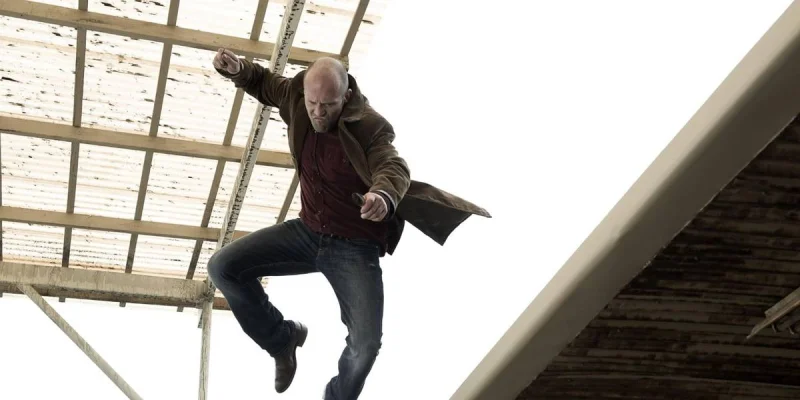
William Goldman’s 1985 novel Heat did something uncommon in Hollywood: it became two different movies, nearly three decades apart. First came Heat in 1986, with Burt Reynolds in the lead and Dick Richards directing. Then, in 2015, the story returned as Wild Card, with Jason Statham fronting the film for Simon West.
That is why Reynolds remains the key name in the search today. Heat was not just another star vehicle for him. He saw it as a chance to revive a career that had been battered by a series of disappointments in the early 1980s, and he needed that chance after a serious jaw injury on the set of City Heat and the failure of Stick. By then, the rougher edge he had shown in Sharky’s Machine was still part of his appeal, but it no longer carried the same weight.

Goldman wrote Heat out of his distaste for Las Vegas and the seedy ways people made a living there, and he built the story around Nick Escalante, a lonely chaperone who wanted enough money to leave for Venice, Italy. In the later version, Escalante was renamed Nick Wild, but the core remained the same: a gambler who takes small jobs, a man who works the casinos while trying to get out of them. Holly hires him to get payback against Danny DeMarco and his thugs after they assault her, and Nick takes care of the men. He is then drawn into another job, this time to toughen up a meek rich man named Cyrus.
The problem for Reynolds was that the film carrying his name did not give him the reset he wanted. Heat did not become a box-office success, and neither did Wild Card, even though both Reynolds and Statham had the same kind of screen gift Goldman was writing to: likable charm and the ability to handle their own stunts. That leaves the story in an awkward place. The same novel found two leading men with the right physical ease for it, but only one of them was trying to use it as a lifeline.
Reynolds also had something Statham did not need to prove in 2015: that he could still carry the weight of a comeback. Instead, Heat became a reminder that a good part, even one built around a star’s strengths, cannot always outrun the career moment it lands in. Goldman’s novel moved from one era to another. Reynolds’ version was meant to change his fortunes. It did not.