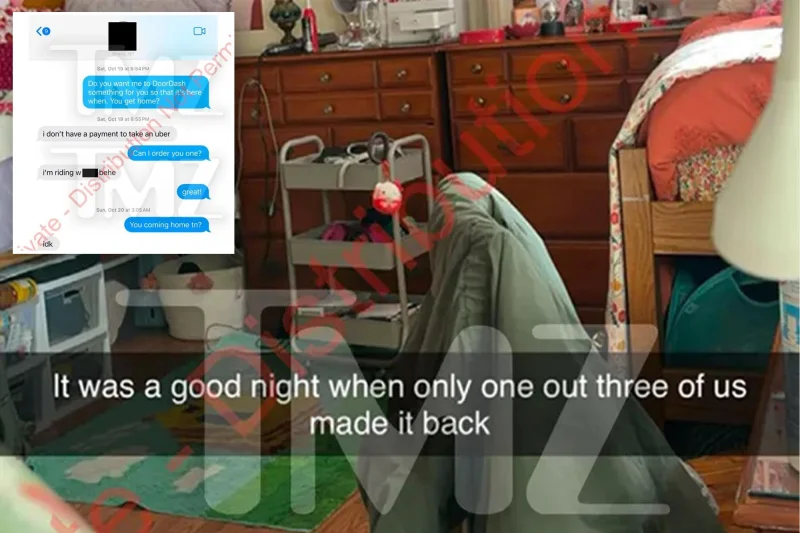
Newly obtained text messages are giving a sharper view of a Cornell University campus sex assault dispute that was already folded into a civil lawsuit, a Title IX finding and a declined criminal case. In the messages, Jane Doe told one fraternity member on Nov. 3 that 90% of what happened that night was not consensual, then later wrote to another man, I know you lied.
The messages were reported on Oct. 13, 2026 at 9:59 PM EDT and cover exchanges over more than two weeks after a night of excessive drinking, drug use and group sex at the Chi Phi fraternity house on Oct. 21, 2024. Doe asked one man to look for earrings she thought she lost that night, and the texts show her trying to make sense of the night while also sounding at moments as if she was minimizing it.

That is why the Cornell 7 update is drawing attention now. The texts do not just repeat the broad outlines of the case; they pin down what Doe and the two men were saying to each other in real time, including one reply in which a man said he would have shut it down if he had been less f[---]ed up and aware of how out of hand it got, then added, i'm so so sorry. Another message from Doe said she did not think there was shame in the encounter, said the sexual stuff was not illegal, and added that she really liked being with the two men. In the same chain, she also said they were all too drunk and high and wrote that the two men were super out of it.
Thomas Giuffra said the exchanges reflected classic symptoms of delayed recognition and called them a textbook response to sexual assault. Cornell's Title IX investigation later found both men responsible for sexual assault, and both were expelled, according to Giuffra and. CBS News identified the two men in the civil lawsuit as MALE 1 and MALE 2, and both have denied wrongdoing. They have not been charged with a crime, and the district attorney declined to bring charges after an investigation in 2024.
The hardest part of the case is the gap inside Doe's own words. She moved from saying she did not think the sexual part was illegal and that she did not feel shame to later writing that 90% of what happened was not consensual, a shift that gives the messages their force and their ambiguity at the same time. What remains unanswered is what exact evidence Cornell relied on to decide that both men were responsible, because the texts show the emotional record of the night, but not the full proof behind the university's finding.