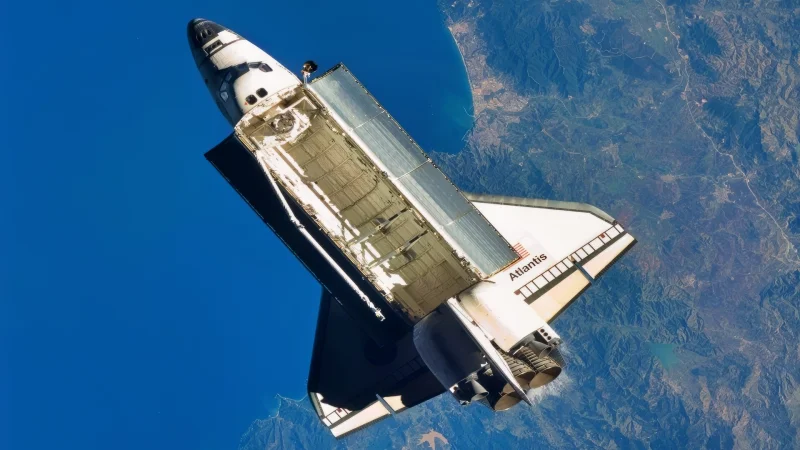
NASA's Space Shuttle era ended on July 21, 2011, when Atlantis made its last Mach 25 glide home and closed a program that had started with the promise of routine trips to orbit. After 135 missions across 30 years, the fleet was gone, and so was the idea that the Shuttle would become a weekly workhorse.
Harry J. Kazianis says he has seen retired Space Shuttles over the years, and the sight still carries the scale of what the program meant. The Shuttle could reach Mach 25, a speed about 17 times faster than an SR-71 Blackbird flying at Mach 3, and it helped build the International Space Station, launched and repaired Hubble, and carried 355 people from 16 countries. It also left behind two mornings that changed NASA forever: Challenger was lost 73 seconds after launch in 1986, and Columbia was lost 16 minutes from home in 2003.

That mix of triumph and loss is why the Shuttle still draws attention today. President Richard Nixon announced on January 5, 1972, that America would build a reusable space transportation system, and the pitch to Congress was bold: a fleet of reusable spaceplanes that could fly as often as once a week for as low as $20 million a flight. Instead, the program never managed more than 9 launches in a single year, and the price settled near $1.5 billion per mission flown.
The numbers explain the gap. Development was projected at $5.15 billion, but NASA spent about $10.6 billion between 1972 and 1982 just on development, and the full program cost about $200 billion in 2010-era dollars. It took 9 years between approval and first flight, and the system that was sold as a reusable shortcut to orbit became one of the most expensive machines in the history of spaceflight.
By the end, the Shuttle had done something few programs ever manage: it delivered both an achievement and a warning. It proved that a reusable spacecraft could fly people, hardware and repair missions into orbit, but it also showed that the promise of simplicity can be overwhelmed by engineering, safety and cost. Atlantis' final glide did not just end a fleet. It ended the argument that the Shuttle was ever going to be the easy future it was sold to be.