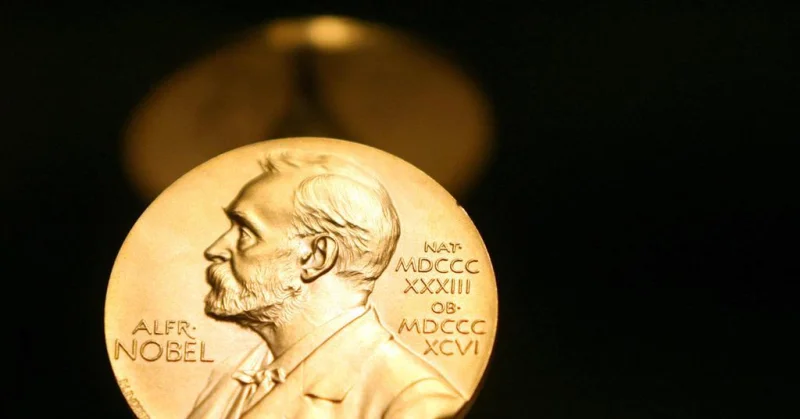
The Royal Swedish Academy of Sciences has awarded the Nobel Prize in Chemistry 2026 to Henri B. Kagan and Kenso Soai, putting two long-running names in chemistry at the center of one of the field’s oldest questions. The prize recognizes work tied to homochirality, the puzzle of why life uses one handedness of molecules rather than the other.
For readers searching the name Henri Kagan today, the reason is simple: the academy’s decision on 2026-10-07 made him a Nobel laureate. Kenso Soai was not waiting by the phone for the call, but out shopping when the news reached him, a reminder that some of science’s biggest moments arrive in the middle of ordinary errands.
The award goes to a problem that has lingered for more than 100 years. Molecules used by life, including amino acids, can exist in two mirror-image versions called enantiomers, yet life is highly selective and works with only one version of sugars or amino acids. That imbalance has long puzzled chemists, and the academy said the two laureates provided a solution to that chemical mystery.

The timing also gives the prize an added edge. Chemistry World had noted that Henri Kagan could, or should, have been on the 2001 chemistry Nobel prize for asymmetric catalysis, but that award instead went to Barry Sharpless, Ryoji Noyori and William Knowles. France’s then science minister even wrote to the Nobel committee to complain about Kagan’s omission, a detail that now reads like a long-delayed correction rather than an aside.
What remains less visible is the exact division of labor between the two laureates. The award statement ties both names to the same breakthrough, but the broader problem they helped solve is not a small one: how a world built from mirror images ended up with life choosing one side and rejecting the other. That is the part that has kept homochirality alive as a chemistry question for generations, and it is why this prize matters beyond the ceremony itself.
Louis Pasteur was among the first to look at homochirality, but the question outlived him by more than a century. Now the academy has drawn a line under the mystery, at least for the purposes of the Nobel Prize, by naming Henri B. Kagan and Kenso Soai as the chemists who helped answer it.