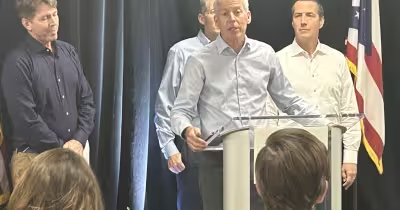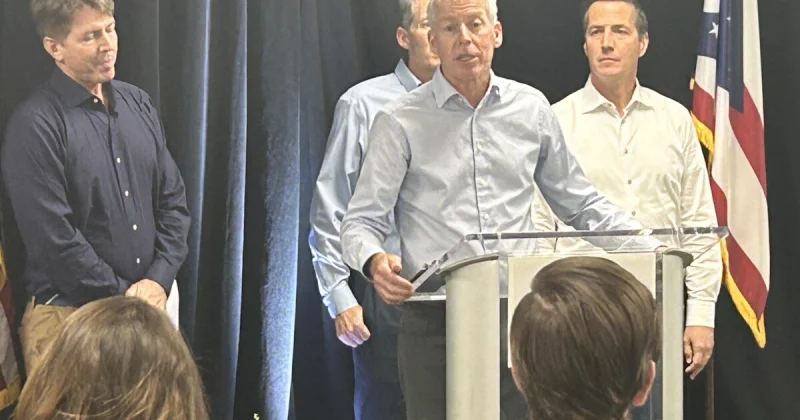
The U.S. Department of Energy on Monday announced a $4.2 billion loan agreement with Vistra to upgrade and modernize three nuclear plants in Ohio and Pennsylvania, a deal that is expected to add 433 additional megawatts to the grid and keep the work going through 2031.
The biggest immediate change is at Perry, where the project is expected to extend the plant's operating life to 2066 and add more than 200 megawatts of generating capacity. For readers tracking Vst Stock, that matters because the federal loan turns a set of plant upgrades into a financed expansion, not just routine maintenance.
Vistra will spread the work across Perry, Davis-Besse and Beaver Valley, and the project is expected to create between 500 and 600 jobs at each site while the upgrades are underway. The company said in a January news release that it had agreed to provide more than 2,600 megawatts of nuclear energy for 20 years to support Meta's operations, and the 433 additional megawatts announced Monday were already part of that package.
Jim Burke said the Meta agreement gives Vistra enough revenue to cover the capital spending and repay the loan over time, and he described the arrangement as the fastest, most practical way to add reliable power at plants that are already running. Greg Beard added that extending existing capacity is a remarkably efficient use of government resources, while Chris Wright said 200 megawatts is about 150,000 homes' average electricity use.
Burke also said the project could make Perry the largest nuclear power plant in the country, though the loan announcement left open how the $4.2 billion will be divided among the three sites. He said the upgrades are not tied to plans for a data center, even though the announcement came about 10 months after Vistra's power purchase agreements with Meta. The financing now ties a long-term federal commitment to a long construction schedule, but the exact breakdown of the money is still the part the market cannot see.