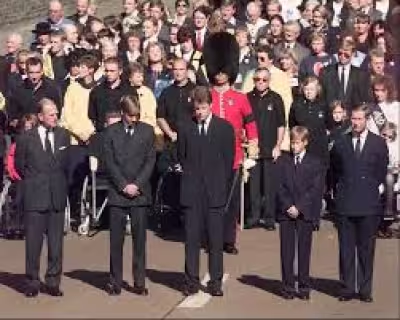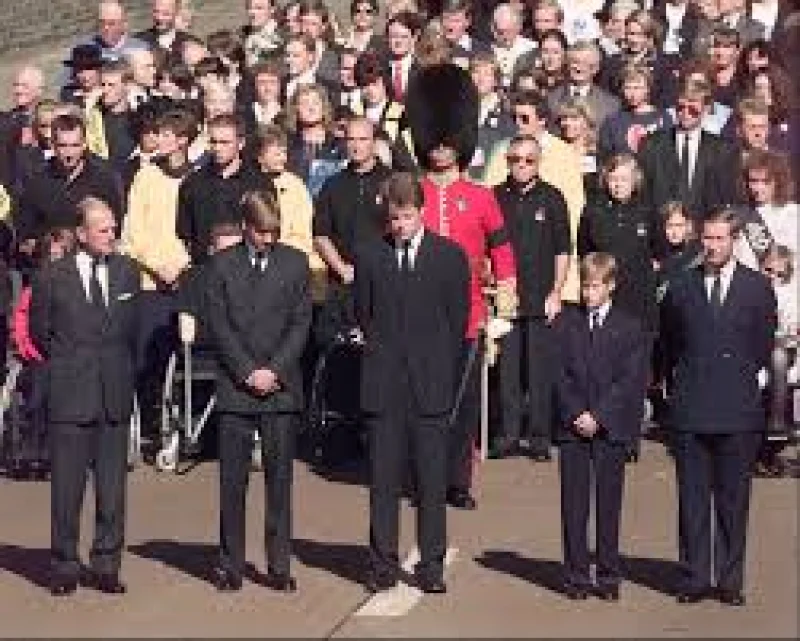
Charles Spencer says he wrote Diana’s funeral address to speak for her, and in a memoir excerpt now circulating he casts himself as the brother who had to give voice to what she could no longer say. He says he was in Cape Town when he heard Diana had died, and that he believed the eulogy should come from someone who could capture her essence and represent her true blood family.
That is why the memoir is being read now: the 30th anniversary of Diana’s death is approaching, and Spencer is using the moment to reopen one of the most watched family narratives of the 20th century. In the excerpt, he also says he wrote that he could do with the money, a blunt line that sits beside a meditation on grief, duty and memory.
Spencer’s account of the funeral speech is not just a recollection of a public moment. It is also a claim about who was fit to speak for Diana at the time. He says Prince Charles phoned him and told him, “Get in there,” followed by, “Finally I can be left in peace with my top bit on the side.” Spencer says that helped shape his belief that the address had to be delivered by someone close enough to understand what Diana meant inside the family and outside it.

The memoir excerpt also turns sharply on the royal family itself. Spencer describes Raine as venomous and Prince Andrew as even more stupid than the average member of the royal family, and he recalls that he and Diana once went swimming with Prince Andrew. He also mentions Norman St John-Stevas in connection with his father’s service, widening the memoir beyond Diana’s death and into a broader family history.
The most striking break with the familiar story comes in Spencer’s account of Diana’s childhood. He says the two of them were “the secure recipients of parental love,” a description that cuts against the long-running portrait of an unhappy home life. That line matters because it is not a passing aside. It is Spencer’s attempt to redraw the emotional map of Diana’s early years, and it invites a harder question about how much of the family story is settled fact and how much is still being argued over by those who lived it.
What comes next is less about a fresh disclosure than about how far Spencer’s version travels on its own. The memoir excerpt, drawn from Diana, My Sister, does not end the argument over Diana’s life; it reopens it, and the anniversary clock gives it a wider audience. For readers, the unresolved point is not whether Spencer has a strong point of view. It is how much of that point of view can stand beside the other accounts that have defined Diana for decades.