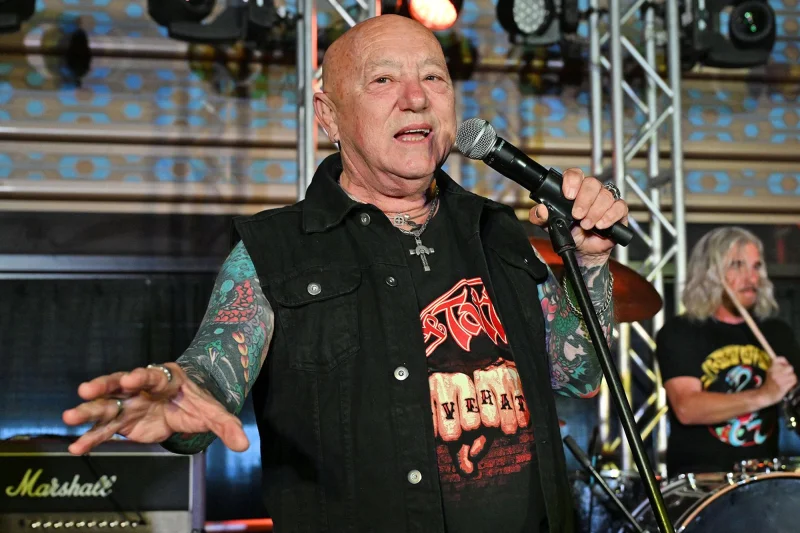
Gary ‘Angry’ Anderson died at 79 on the eve of Monday 21 September 2026, ending a career that helped define Australian hard rock for half a century. He had suffered a heart attack while on Rose Tattoo’s farewell tour in Europe, was brought home to Australia for treatment and could not recover from the cardiac arrest.
The death lands with extra force because the band had still shared a photo of Anderson performing in Cologne on August 8. The next day, Rose Tattoo cancelled its appearance at the Alcatraz Metal festival in Belgium, and the following day said he had been hospitalised because of a medical issue. On August 10, the band called off its final European tour, and three weeks later said its frontman remained in hospital.
That sequence explains why his name has returned to the front of the search queue now. Fans who had seen him onstage days earlier were then told the tour would not continue, and now the man who came to prominence as the singer for Buster Brown before joining Pete Wells’ new band Rose Tattoo is gone. Born in Melbourne in 1947, Anderson had built a reputation over 50 years as one of Australia’s most distinctive voices.

Rose Tattoo’s first major breakthrough came in 1977 with Bad Boy For Love, followed by Rock’n’Roll Outlaw and We Can’t Be Beaten. A romantic power ballad later became Anderson’s biggest hit, and the track has had a fresh burst of attention in recent weeks because of Netflix’s Kylie documentary series. That revival briefly put a new generation in touch with a singer who had spent decades on stages far from the spotlight.
There was still a hard edge to the story even at the end. The band’s farewell run had been meant to close out the European chapter properly, but instead it collapsed into hospital updates, cancelled dates and a final repatriation to Australia. In the statement from his family and bandmates, Anderson was described as being surrounded by loved ones here in Australia, and they asked for privacy as they grieve a loss they said would be deeply felt both at home and overseas.
What remains now is the legacy of a performer whose voice carried from backyard BBQ playlists to sports highlight packages for decades, and the unanswered question of which single song will define him most for listeners newly finding him through Netflix. For many long-time fans, though, the answer will stay the same: the frontman who never softened the name Angry, and never sounded anything less than unmistakably his own.