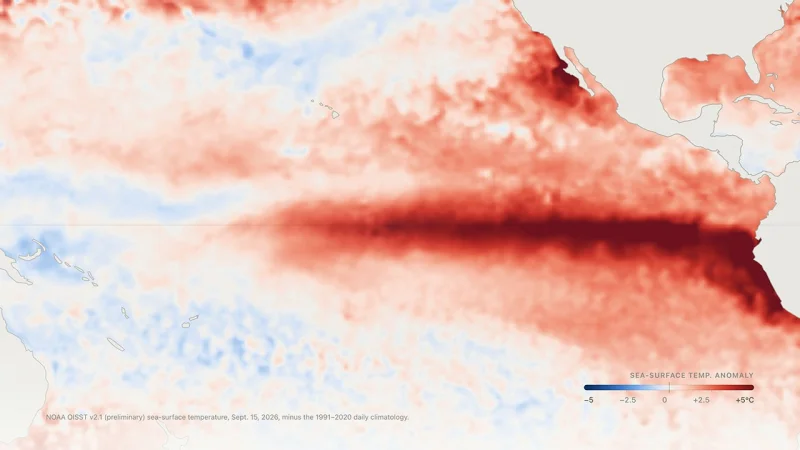
El Niño is back in the weather conversation, but the thing itself is not a storm. It is a periodic warming of water over weeks and months near the equator in the central and eastern Pacific Ocean, and that warming can nudge weather patterns far beyond that stretch of sea.
That is why people searching Tampa Bay weather are often really asking whether El Niño means a certain kind of winter ahead. The answer is more complicated than a simple yes. El Niño has happened for thousands of years, and it became a familiar name in the 1982-83 record-setting event before exploding into pop culture during the 1997-98 event, when Chris Farley helped turn it into something many Americans recognized even if they did not understand it.
The important point is that El Niño is not a storm like a weather system that brings a day or two of heavy rain to California or heavy snow to the East Coast. It is a broader shift in ocean temperature, and once that tongue of warmer water develops, it can influence weather from hurricane season into winter. It is also not correct to say El Niño caused a storm, or that El Niño will simply arrive in Anytown and take over the forecast.

There are also different versions of the pattern. Some El Niño events push more heating into the Central Pacific south of Hawaii and are known as El Niño Modoki. Other events place the warmest water nearer the South America coast. Those shapes matter because Modoki and more conventional El Niño events can affect weather around the globe in different ways, which means two events that share the same name can still produce different results.
That is where the neat story falls apart. Even a strong El Niño does not guarantee the usual temperature and precipitation pattern, and it does not make those patterns more extreme. A stronger event only raises the chance that the typical pattern shows up. The polar vortex can then reinforce that pattern or interfere with it for at least a period of weeks, which is one reason forecasters treat El Niño as a major clue, not a forecast by itself.
For Tampa Bay weather watchers, that is the takeaway: El Niño can tilt the odds, but it cannot lock in a specific outcome. The next question is not whether El Niño is coming and taking control. It is which shape it takes, how strong it becomes, and whether other forces in the atmosphere help it or blunt it before the season is done.