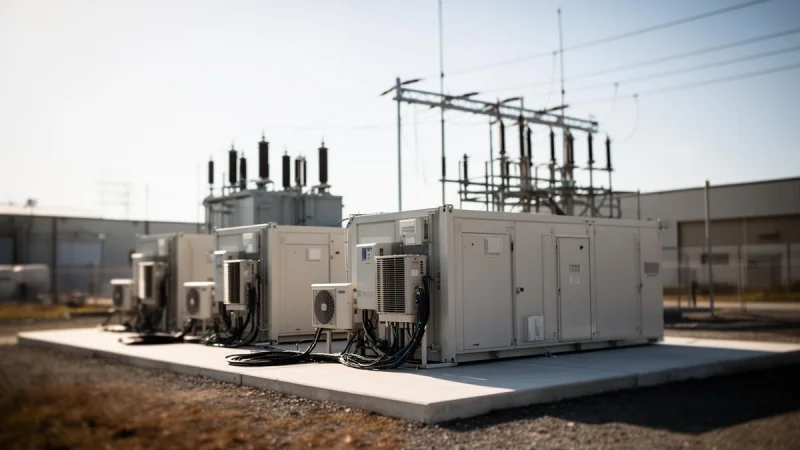
Anthropic and OpenAI are now looking for smaller data center deals in the 20–30 MW range, a clear turn toward faster capacity that can be brought online sooner in Europe and the United States. The shift points to a different kind of AI buildout: less about one giant campus, more about getting usable compute in place quickly.
That matters because the race for AI infrastructure has usually been told in much larger numbers. OpenAI’s Stargate AI infrastructure project had already gone past its original 10-gigawatt commitment by April of this year, and after that the company announced another 3 GW in Georgia and 8 GW in Ohio. Anthropic, meanwhile, was reported in August to have signed a cloud agreement worth about $45 billion with Nscale tied to roughly 460 MW at a data center development project in West Virginia. Those are the kinds of commitments that have defined the market until now.
But the new search is narrower and more practical. Anthropic has approached deals of this scale in the UK and Northern Europe, while OpenAI has been exploring smaller compute capacity in Northern Europe. Both companies have also discussed similar capacity in the United States. Jabez Tan said securing several megawatts at an existing powered site may be more practical than waiting for a large block of capacity at a single location, and he added that many inference workloads can be handled across multiple smaller clusters processing different requests separately.

That lines up with the pressure building inside the market. A report from JLL predicts that capacity dedicated to inference workloads will keep rising, and the companies are increasingly chasing deployments that fit that demand. OpenAI said it is building a diversified compute portfolio to meet growing global demand for AI, and that different workloads require different infrastructure. It also said it weighs demand, performance, reliability, timing and cost when it looks at opportunities. Anthropic did not respond to requests for comment.
The friction is hard to miss. These smaller 20–30 MW searches sit alongside recent megawatt-scale and gigawatt-scale commitments that looked built for the biggest model-training campaigns. Now the same companies are trying to add capacity in quicker slices, in places where land and power are tighter and where large campuses can run into local opposition. In Europe especially, shortages of land and power supply make that trade-off sharper.
For now, the open question is not whether Anthropic and OpenAI want more compute. They clearly do. It is whether the next wave of AI infrastructure comes from a few headline-grabbing mega projects or from a wider spread of smaller sites that can deliver faster access to available capacity.