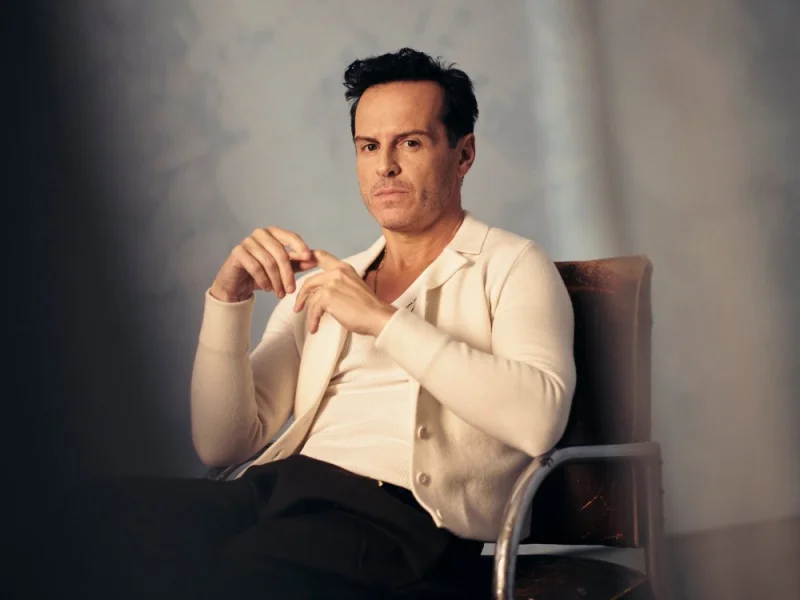
Andrew Scott used TIFF on Saturday to turn a casting debate into a simple accusation: prejudice. Speaking at the Royal Alexandra Theatre during the festival’s In Conversation series, he said criticism of gay actors playing straight roles is “just prejudice,” while discussing Elsinore, the first film he has ever produced.
That is why Scott’s comments landed now. The actor, 49, was not talking in the abstract. He was introducing a film he said was “so incredibly personal” to him, one he chose to produce because it is set in the theater and examines the representation of gay actors in the 1990s, along with family. For Scott, the project is less a commentary than a reckoning.
He also framed the issue in blunt, contemporary terms. “I don’t have the internet. I never see it,” he said, before adding that it is “wild” how people online can be expected to say almost anything. The remark matters because the old argument about who gets to play what has never really gone away. It only changed shape, moving from industry argument to online scrutiny, where casting choices are picked over in public and careers are measured against them.

Elsinore itself reaches back to 1989. In the film, Daniel Day-Lewis walks offstage during a production of Hamlet at London’s National Theater, and Ian Charleson sees the departure as a chance to prove what he is made of as an actor. The story also places Charleson’s body under the pressure of AIDS, with Olivia Colman playing his doctor.
The timing of Scott’s decision to produce the film is telling. This is not a debut chosen for scale or safety. It is a personal project about theater, illness, family and the limits placed on gay performers, and Scott tied it to his own history as an actor who began young. He said he was 17 when he made his first film, Korea, which premiered at TIFF in 1995, and recalled that Donal Donnelly taught him how to behave on a set by being kind to everyone around him.
The unresolved question is not whether Scott believes the debate is over. He plainly does not. It is whether a film built around the bruised history of one actor’s career can shift how those arguments are heard now, when the same questions keep surfacing around his own work and casting. For Scott, Elsinore is not a sidebar to that discussion. It is his answer to it.