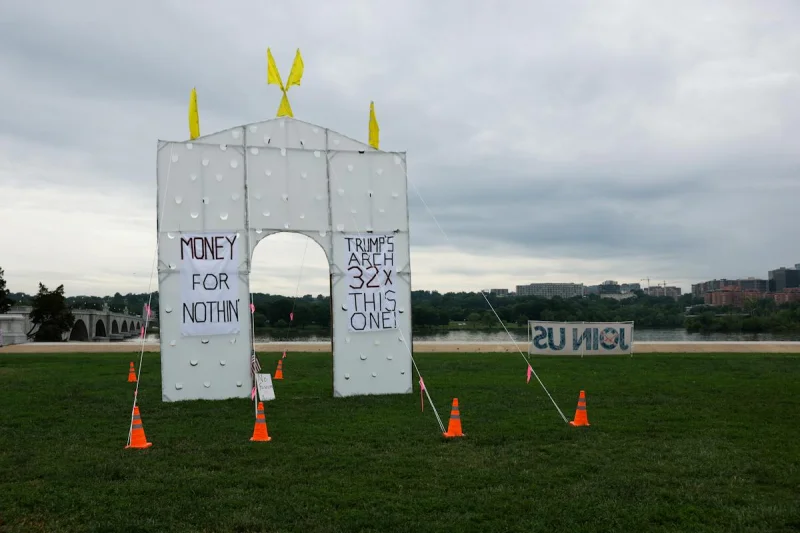
The Trump administration is acknowledging that Donald Trump’s proposed Triumphal Arch in Washington, D.C., would damage historic sites near Memorial Circle, even as it pushes ahead with the project. Government officials now say the arch would overshadow Arlington National Cemetery and affect other landmarks, including the Lincoln Memorial.
The new assessment lands as preservationists are being asked to sign off on a proposed agreement by noon Monday, a step that could clear legal hurdles for the arch. The White House hopes to move the project toward final approval as early as November, making the timing of the review especially important.
What sets the latest document apart is not just the admission of harm, but the blunt way it describes the site. The NPS document says Memorial Circle sits inside a highly sensitive historic and commemorative landscape, and that there is nowhere else the arch can be built because the proposed location is central to the undertaking. It says the project’s placement contributes to adverse effects on historic properties through its setting, design, feeling, association, spatial organization, circulation, and contributing views and vistas.

Those effects, the document says, cannot be fully avoided. That is the point where the administration’s position becomes harder to square with its remedy package. The White House is offering new signs and web pages to explain the project, says construction can be managed so it does not interfere with burials at the cemetery, and wants the surrounding landscape documented before building begins. In other words, it is trying to soften the impact while keeping the arch in the same place that causes it.
There is also resistance outside the approval process. Three veterans and an architectural historian have already sued to stop the arch’s construction, and U.S. District Judge Tanya Chutkan ordered the government last week to give 48 hours before breaking ground. The Trump administration is fighting that order, so the project is now being pressed through court, preservation review and federal approval at the same time.
The White House’s urgency helps explain why Monday’s deadline matters. An email said the NPS asked historical preservationists and other groups to review and sign the agreement by noon, and the agreement would overcome legal hurdles and secure final approval for the arch. If that sign-off comes through, the administration could submit the project to the National Capital Planning Commission for final approval as early as November. If it does not, the project stays stuck in a process built to slow it down.