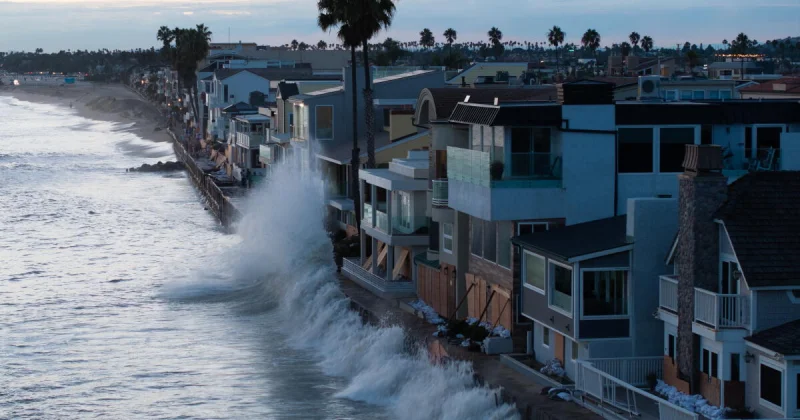
California beach communities are heading into a new stretch of higher water as a coastally trapped Kelvin wave moves up the coast of Mexico and is expected to reach the U.S. West Coast soon. The wave could lift sea level off California by about 6 inches and keep that pressure on the shoreline for months.
The timing matters because the coast is already under strain. Strong surf across Southern California this weekend blasted through a seawall in Long Beach, carved a massive sinkhole at a celebrity’s Malibu home and damaged several Dana Point homes, a reminder that even small changes in water level can turn damaging when tides are already running high.
Jonathan Warrick said houses across Southern California were getting battered, especially at high tides, and that hurricane-generated swells and high tides were extremely damaging to those homes. He said when the water level is extra high, a foot or more above what is expected, it can really wreak havoc. That is the problem now: the Kelvin wave is not a surfable wave and would not be overtly noticeable to swimmers or boaters, yet it is still expected to add enough water to matter along a coast where erosion is already remaking the maps of popular beaches from Carlsbad to Malibu to Santa Cruz.

El Niño is driving the setup. As the climate pattern strengthens, the usual east-to-west trade winds along the equator weaken or even reverse, allowing hot water and high sea surface heights to slosh back from the far western equatorial Pacific all the way east, said Dillon Amaya of North Carolina State University. Warm water that normally sits near Indonesia moves toward a cooler part of the Pacific near Peru, pushed along by Kelvin waves, and when that wave hits South America it splits in two, with one branch heading north toward California.
That is why the coming rise is landing on top of an already stressed coast. California has already seen about a foot of sea level rise over the past 125 years from human-caused global warming and the melting of the polar ice caps, and it has also been dealing with abnormally high tides and a long-lasting marine heat wave unrelated to El Niño. Amaya said the wave, El Niño and the marine heat wave are together contributing essentially another foot of sea level rise, in addition to the rise the state has already absorbed.
The immediate question is not whether the Kelvin wave will be noticed on a beach day. It will not. The question is how much more damage a few inches of added water can do when it arrives on top of high tides, storm surf and already weakened shorelines. The answer is likely to become clear over the coming weeks, when California beach communities begin to feel the next round of rising sea levels and the effects may linger well into the months that follow.