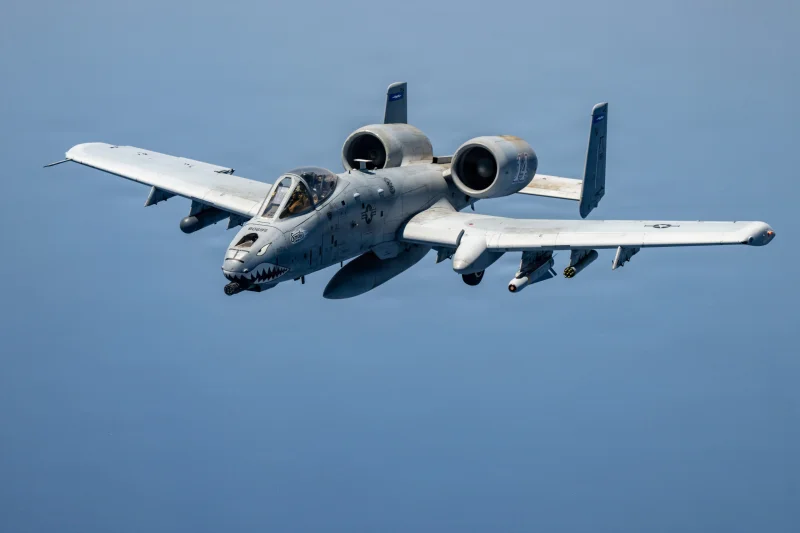
An Iranian ballistic missile attack on Muwaffaq Salti Air Base in Jordan damaged multiple U.S. warplanes on Sept. 8 Eastern Time, including one A-10 Thunderbolt II with a severely damaged wing and about eight F-15E Strike Eagle fighters that were lightly damaged. U.S. and Jordanian forces fired dozens of interceptors at the missiles, and U.S. officials said no American personnel were killed.
The damage gives a sharper answer to what was happening at a base that sits at the center of U.S. airpower in the region. Muwaffaq Salti Air Base, also known as MSAB, hosts dozens of U.S. warplanes and has been used as a key airpower hub for operations against Iran, which has targeted the facility numerous times since the conflict began in February.

The A-10’s wing took the hardest hit, but the F-15Es were considered serviceable after the attack, which means they were damaged without being taken out of action. That matters because the strike hit aircraft rather than people, showing that Tehran’s missiles could still reach a defended base even when interceptors were launched in volume.
The missing piece is how many missiles actually got through. U.S. and Jordanian forces launched dozens of interceptors, but the record provided does not say how many Iranian missiles were fired or how many struck the base. The Islamic Revolutionary Guard Corps later claimed it damaged U.S. aircraft there, a claim that lined up with the damage assessment even as the U.S. said no Americans were killed.
That leaves the attack with two clear results and one unresolved question. The aircraft were hit, the personnel survived, and the extent of the missile penetration remains the detail that best measures how exposed the base was on Sept. 8. CBS News first reported the damage to the aircraft, and the assessment now points to a strike that hurt U.S. materiel without delivering a fatal blow.