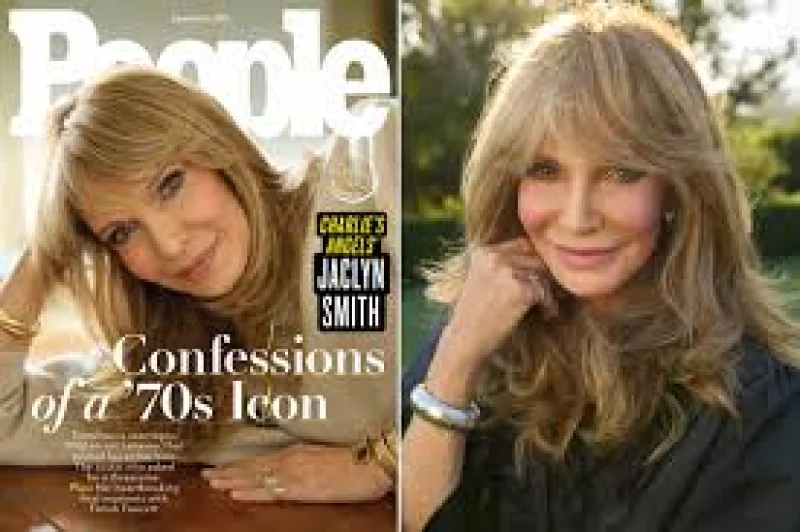
Jaclyn Smith says she asked her agent for a raise after learning that pay on Charlie’s Angels was uneven. The request came after she compared her own compensation with Farrah Fawcett’s and saw that Kate Jackson had top billing on the series.
Smith’s account matters now because it puts a familiar television memory in sharper economic terms: who was paid what, and who got recognized first. In the 1970s, Charlie’s Angels sold an image of three independent women working together, but Smith’s recollection suggests the business behind that image was not as balanced as the show itself.

Smith did not present the money issue as a complaint so much as a lesson. She said her father gave her business guidance, and she used it when the gap became clear. That advice appears to have shaped her response: instead of accepting the lower rate, she went to her agent and pushed for more.
There is still a missing piece. Smith did not say exactly how much she had been paid, how much Jackson or Fawcett made, or whether the raise she requested ever came through. The pay gap is the part that lingers, because the series’ public image and its internal hierarchy did not match as neatly as fans might have assumed.
The question is sharpened by the show’s later legacy. After one season, Fawcett left and Cheryl Ladd replaced her, and Smith, Ladd and Jackson reunited in April 2024 for the series’ 50th anniversary at PaleyFest in Los Angeles. At that reunion, Smith spoke about the show’s portrayal of independent women, a reminder that the cultural memory of Charlie’s Angels has lasted far longer than the salary dispute behind it.