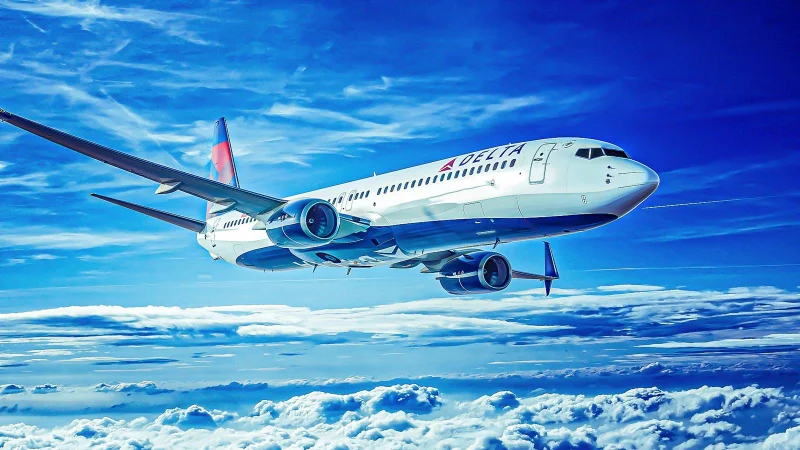
Delta Air Lines flight 2311 dropped rapidly toward Las Vegas on Sunday after an unexpected pressurization issue forced emergency oxygen masks to deploy, turning a routine trip from Los Angeles to Salt Lake City into a midair emergency. The Boeing 737-900ER later landed safely and was back in service within hours.
Flightradar24 showed DL2311 leaving Los Angeles International Airport at 5:06 PM and reaching Salt Lake City Airport at 12:24 AM, underscoring how long the flight’s disruption lasted even though the aircraft returned to service the same night. The episode is drawing attention because passengers were not just delayed; they were dealing with a sudden loss of cabin pressure while the jet was still in the air.
Delta said the crew followed training and procedures to bring the aircraft to optimal altitude after the pressurization problem appeared. A Reddit user who said they were on board gave a harsher account, saying the pressurization system failed, their ears hurt immediately, the oxygen masks fell, and the plane made a rapid descent into Las Vegas. That passenger described the experience as pretty traumatic.

Those two versions are not fully at odds, but they leave the central question untouched: what actually failed. The malfunction that caused the depressurization has not been publicly revealed, and that means the difference between a minor technical issue and a more serious system problem remains unresolved. Delta has only said the crew handled the emergency according to procedure.
The Sunday event also invites comparison with Delta flight 760 on January 5, when an Airbus A319 was forced to divert because of a slow pressure leak and was able to use backup systems to repressurize before heading to New York JFK as a precaution. That earlier case involved a different pressure problem, which makes the lack of detail on DL2311 more noticeable, not less.
For now, the known facts point to a sharp but controlled emergency: a rapid descent, oxygen-mask deployment, a safe landing, and a quick return to service. What remains unanswered is the one thing passengers would want most after an in-flight pressure scare of this kind — what caused the cabin to lose pressure in the first place.