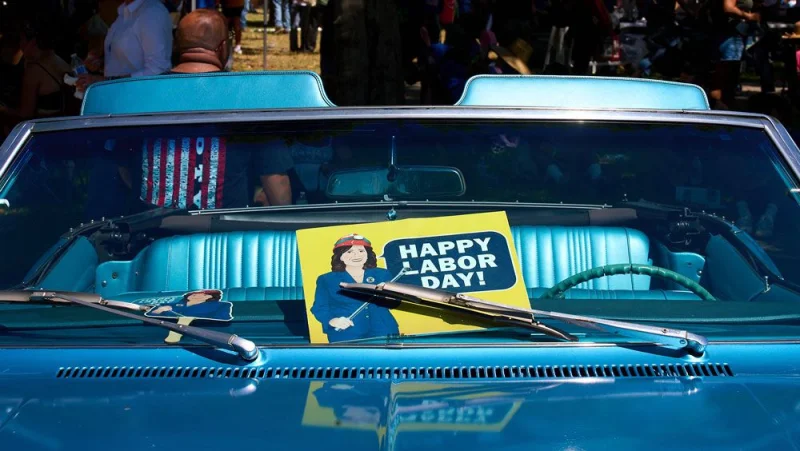
Labor Day is a federal holiday observed on the first Monday of September, and it exists to honor laborers and labor movements. Its roots run back to the late 1800s, when workers were pushing for shorter hours, better pay and safer conditions in an economy that was changing fast.
That is why people still search for why do we celebrate Labor Day every year as the holiday approaches. It is not just a day off on the calendar. It marks a moment when workers began organizing publicly and demanding that their contributions to the U.S. economy be recognized.
As manufacturing grew in the late 1800s, more people who had worked on farms moved into factories. The work often meant long hours, and conditions could be poor or unsafe. In response, workers organized to protest and to press for policies that would improve life on the job. The movement depended on the freedoms now protected by the First Amendment: speech, assembly, association and the right to petition the government.

By the late 1800s, labor activists were speaking out and petitioning for a federal holiday to recognize workers’ contributions. Peter McGuire, who was part of the Brotherhood of Carpenters and later a co-founder of the American Federation of Labor, and Matthew Maguire, who was part of the International Association of Machinists and the Central Labor Union, are both said to have proposed the idea. Their shared credit is part of why the holiday’s origin story has never been fully neat.
What is certain is what happened in New York City in 1882. McGuire and Maguire attended the first Labor Day parade in New York City that year, and thousands of workers took unpaid time off to march through lower Manhattan. They carried signs reading “Less Hours and More Pay,” then listened to speeches and shared a picnic after the parade. The scene turned a labor demand into a public statement, and it gave the holiday a face long before it had a fixed place on the calendar.
Over the next 12 years, labor activists kept pressing the case for recognition. Labor Day is now observed each year on the first Monday of September, but the deeper answer to why it exists is still the same: it was created to honor workers, and it grew out of a movement that used the rights of speech, assembly and petition to win a place in public life. What remains less clear is the exact step that turned that campaign into a federal holiday.