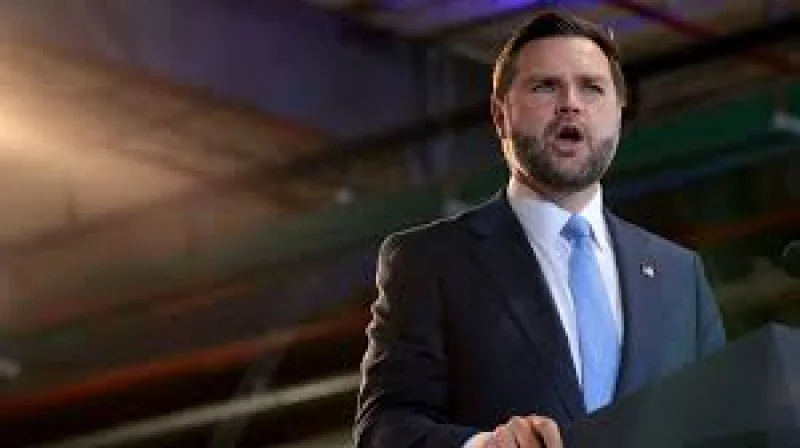
Rod Dreher moved quickly to defend J.D. Vance after the vice-president said he would not be shocked if the Antichrist was walking among us and made clear he was not preoccupied with whether the end of the world was near. Dreher said the comments would not hurt Vance and argued that, for many Christians, the belief is ordinary rather than alarming.
The timing matters because Vance’s remarks are being picked over now, and he is due to appear behind the lectern on Thursday afternoon for the first White House press briefing since the departure of Karoline Leavitt. That gives the comments a public stage beyond a Christian podcast, where Vance was discussing his faith, his duties and the strain of trying to live them out in office.
Dreher, speaking on the 's Today programme, said most Americans inclined to vote Republican already believe this stuff. He added that the idea might sound bonkers to someone outside the Christian religion, but it is a very, very common belief within Christianity. In his telling, Vance was not venturing into fringe territory at all. He was describing a framework many believers already accept: that the Antichrist and the end times are part of the final events in the world's existence.

Vance, who became a Catholic as an adult and converted in 2019, tried to steer the focus away from apocalypse talk. He said it is probably bad for him spiritually to spend too much time on the end times, and that he has to be good to his wife and kids, be as good of a leader as he can for the United States of America, and do as much of God's work as possible right now. That is the line that sits uneasily beside the newer remarks: he says he is not fixated on the end times, while his ally says the belief itself is mainstream among Christian Republicans.
There is also a political edge to the discussion. The article says Vance has occasionally tangled with Pope Leo and Francis over the Trump administration's immigration policy, which has kept his religious identity in public view since his conversion. Dreher said the world appeared to be going crazy because of rapid development of AI and ongoing conflicts, a backdrop that helps explain why talk of the Antichrist can sound less abstract than it once did. But the immediate test is simpler: whether Vance can talk about faith in public without letting the conversation overwhelm the job he is about to do at the White House.
For now, Dreher’s defense is the more consequential reading. It recasts Vance’s comments not as an outlier’s alarm, but as a familiar Christian belief set against a moment that already feels unsettled. The real question is not whether he said too much on the podcast. It is whether, on Thursday afternoon, the vice-president can shift the room back to governance after inviting everyone to think about the end of the world.