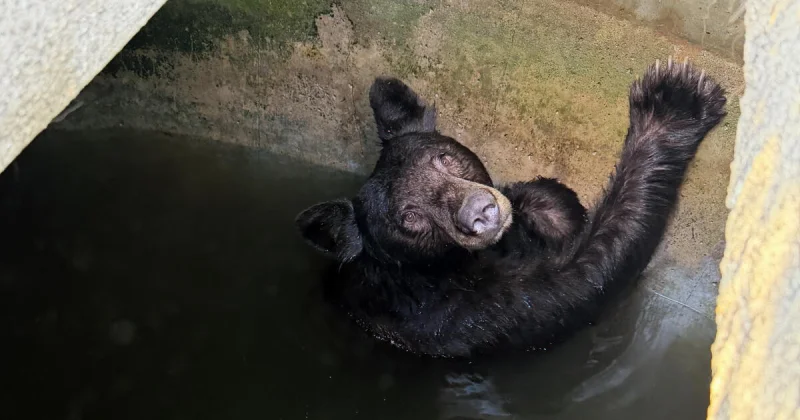
A mother black bear and her three cubs were pulled from a concrete cistern in Marshall Canyon Regional Park late Saturday after a long rescue that began with runners hearing distress sounds near the trail. The family was found trapped in La Verne during a dangerous heat wave, and all were declared safe around 10 p.m.
The bears were discovered around 8 a.m. by three Glendora residents running near the Claremont Hills Wilderness Park’s 5-Mile Loop Trail. Jamie Kirk said he climbed about seven feet to the cistern opening and looked inside after hearing a howling, whimpering noise. What he saw was a mother bear standing in water and trying to keep herself above it, with one cub already gone before help arrived.

Crews from the Urban Search and Rescue team worked with the California Department of Fish and Wildlife to drain the tank, widen the small vent hole the bears had fallen through and place a ladder inside so the rest could climb out. The Fire Department shared video of the rescue. The tank held water at the time, and Kirk said the mother had to brace herself against the wall to stay out of it, a detail that made clear how little room the animals had to move.
Officials said the bears may have entered because they were thirsty, but that explanation remains unconfirmed. That uncertainty matters because the cistern was large enough to trap a bear family for at least 12 hours, and the high temperature in La Verne reached 97 degrees on Saturday. The sequence is clear even if the cause is not: the animals got in through a small opening, one cub got out on its own, and the others needed crews to make a way out.
The tank is now being secured so bears and other wildlife do not end up trapped there again. What remains unanswered is how often a hazard like this has gone unnoticed before, and whether the fix will hold before another heat wave pushes animals toward the same risk.