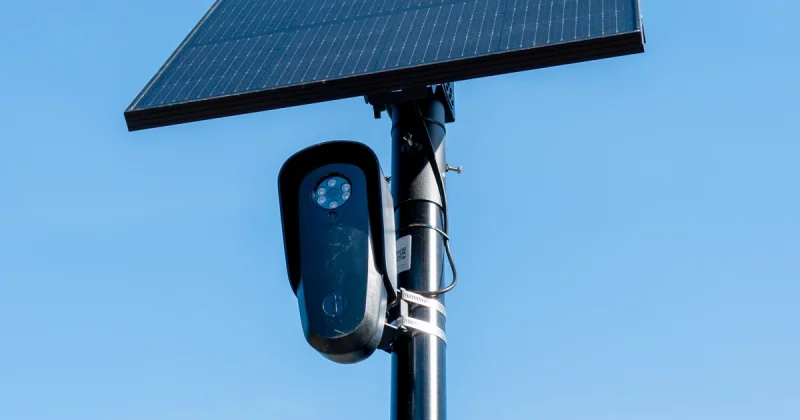
Florida’s state transportation office on Monday revoked the right of local police to place license plate readers on state highways and state rights-of-way, forcing agencies that had approvals to pull back from those road corridors. Will Watts told law enforcement in a one-page memo that the department was revoking all previously issued approvals for license plate readers in state rights-of-way.
The move matters now because it changes where surveillance cameras can operate in Florida’s road network, and it does so immediately for agencies that had been using them along state-managed land. The order does not affect cameras on private property or on local rights-of-way, so the crackdown stops short of a full ban.
Watts said the decision was driven by a recent exponential increase in deployments of law enforcement cameras and by concerning reports of misuse, data privacy concerns, and surveillance schemes. His memo said the goal was to preserve Floridians’ sovereignty and quality of life, a framing that turned a technical permit decision into a statewide rebuke of how the cameras have spread.

That is where the dispute sharpens. The Jacksonville Sheriff’s Office said it would discontinue the use of license plate reader technology throughout Duval County effective immediately, while also describing it as an enormously valuable investigative tool. Flock Safety, which supplies the cameras, said the technology helps law enforcement agencies across Florida solve serious crimes, find missing people, recover stolen vehicles, and support safer communities.
Flock said its system had been used in Florida in the last few weeks to find missing children, lead to the arrest of a murder suspect, and assist in solving numerous other crimes. Florida, though, has made clear it sees a different risk: it is trying to clear state right-of-ways after what officials view as a fast expansion of camera networks that can do more than read plates. DeSantis said last week that surveillance had gone too far, and the state’s action aligns with that line even as it leaves local roadways and private land untouched.
The practical question now is how many agencies will have to remove or stop using readers from state rights-of-way and how quickly they will do it. For now, the answer is limited to the road corridors Florida controls, but the memo gives local departments no room to treat those approvals as still alive.