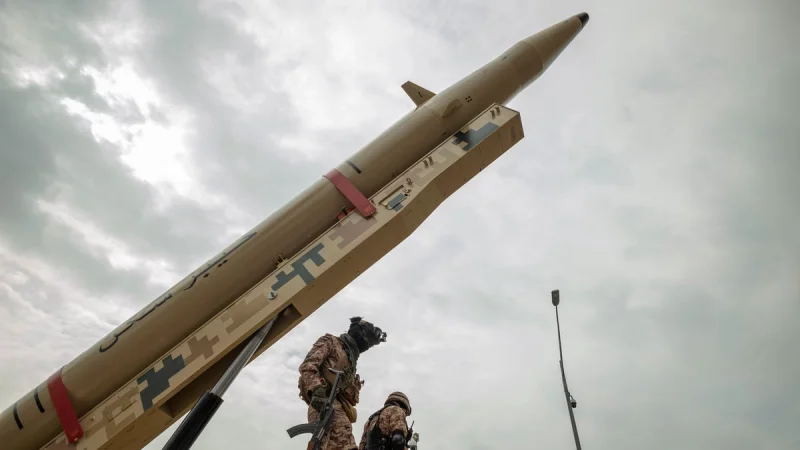
Iran has put a new ballistic missile into the fight that U.S. bases across the Middle East may have to reckon with now, not later. The Kheibar Shekan, which Iran says it has used against American and allied targets, is a 900-mile-range weapon that can alter course in the final phase of flight and is hard to spot before launch.
That matters because the missile is being linked to recent strikes during the war with the U.S. and Israel, and one of them killed three American service members on July 17 at Muwaffaq Salti Air Base in Al-Azraq, Jordan. Iran's military has also been tied to attacks on the U.S. naval hub in Bahrain and other American bases, putting a name to a threat that had until recently been easier to track than to stop.
Jonathan Hackett, who spent two decades working on Iran-related military and intelligence issues out of six U.S. embassies, said the shift is more than just another round in a familiar contest. “they're doing something different,” he said, adding that U.S. forces now have to “change your defensive posture for missile defense in a way that we hadn't been doing previously. Ever,”

The Kheibar Shekan, also called Castle Breaker, is mounted on mobile launchers and uses solid fuel, which makes it easier to move and harder to detect before launch. American defenses have long been built around tracking fixed ballistic paths, but this missile can quickly change course in the last stage of descent, which is one reason it is described as more difficult to intercept than older systems.
Iranian government statements said the missile was used in the July 17 strikes on Muwaffaq Salti Air Base, and an Iranian state-run outlet later said on Aug. 31 that Kheibar Shekan missiles hit Muwaffaq Salti and the King Hussein air base in Jordan. The IRGC-affiliated Tasnim News Agency said the IRGC targeted technical and maintenance infrastructure as well as fighter-jet bases at the two facilities and caused significant damage.
That claim is also where the story gets murky. Iran and analysts attribute the July 17 and Aug. 31 attacks to Kheibar Shekan missiles, but U.S. officials have made that hard to corroborate publicly. The distinction matters because if the attribution is right, it means a missile Iran says can reach Israel, Al Udeid Air Base in Qatar, Prince Sultan Air Base in Saudi Arabia and Al Dhafra Air Base in the United Arab Emirates has already been used against American and allied sites in combat.
The broader message is clear even without every launch being independently confirmed: Iran has fielded a missile that changes the threat picture for U.S. bases in the Persian Gulf and beyond. With President Donald Trump having launched the war with Iran jointly with Israel six months ago, the question now is not whether the Kheibar Shekan exists, but how often U.S. defenses can afford to miss the moment it fires.