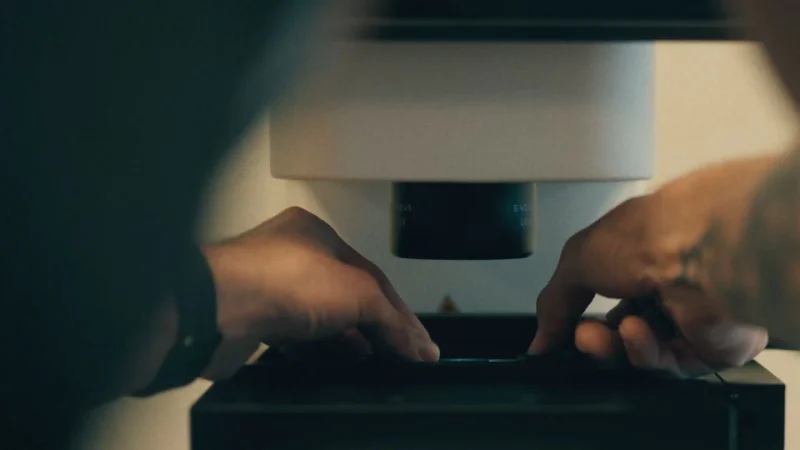
Anthropic has opened a research preview of the Model Hardware Standard, giving a first group of scientific research labs and advanced manufacturers access to a shared specification that lets an AI agent operate physical devices. The standard is built to help agents control multiple lab and manufacturing instruments in parallel, while keeping the system safe enough for real-world use.
The preview is the first clear sign that Anthropic is trying to move AI agent work beyond software screens and into the equipment that runs experiments and production lines. The company says the standard can support tasks from routine drug discovery experiments to laser calibration on a quantum computer, which gives the release immediate relevance for people looking for faster ways to coordinate physical workflows.
That matters because setting up hardware today is slow. A lab or manufacturing facility typically needs weeks, if not months, to integrate devices that often do not communicate with each other, and specialists usually have to build bespoke connections by hand. The Model Hardware Standard is meant to cut that work to hours or minutes by giving any device with a programmable interface a common way to be discovered, read from and written to.

The standard began as a collaboration between Anthropic and HHMI Janelia Research Campus, and Anthropic is now sharing an early version with partners across science, robotics, electronics and manufacturing. The system is model-agnostic and can be accessed through standard protocols such as the Model Context Protocol, which means the hardware layer is not tied to one AI stack or one kind of agent.
But the same feature that makes the standard useful is also what makes it sensitive. Anthropic says agents using the Model Hardware Standard can reason through each step in an experiment, update parameters in real time and, in some cases, recover from hardware errors without intervention. That kind of autonomy could help researchers and engineers run around-the-clock workflows, yet it also demands careful checks before AI systems are trusted with equipment that can move, mix, measure or calibrate on their own.
To deal with that, Anthropic plans to build safety evaluations and develop best practices for AI systems operating physical equipment before it makes the standard open source. In practice, that means the preview is not the finish line; it is the test bed. The next stage will decide whether the standard can become a common language for hardware without making oversight an afterthought.