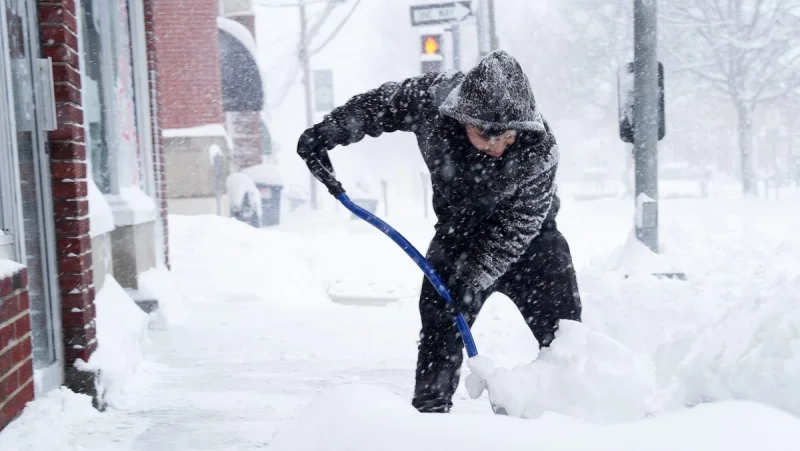
The Old Farmer's Almanac released its full winter forecast on Tuesday, Sept. 1, and it is calling for a mild, near-normal winter for much of the United States. But the outlook is far from uniform, with wetter weather expected in parts of the West, South, Midwest and Florida, and snowier conditions forecast for parts of the Northeast, Appalachians, the West and Alaska.
The timing matters because the forecast lands before winter has even begun, giving readers a first look at how one of the country's best-known almanacs sees the season shaping up. The print publication becomes available Tuesday, Sept. 1, and the new forecast arrives while people are still thinking back to the damage from January's massive winter storm and a March megastorm that followed.
For the winter itself, the Almanac says parts of the East, Plains and Southwest should lean drier than normal, while much of the West and parts of the South, Midwest and Florida should see wetter conditions. It also says parts of the Northeast and Appalachians, along with parts of the West and Alaska, could be snowier than usual. That broad split makes the forecast useful as a regional guide, even if it is not precise enough to tell any one town what the first storm will do.

The forecast lands in a space where weather pros and almanacs often occupy different worlds. Don Day said earlier in August that he did not know what voodoo magic the Almanac uses to make its forecasts and that detailed winter forecasting should wait until maybe mid to late September. Meteorologists generally pay little attention to annual almanac outlooks, yet the Old Farmer's Almanac says its traditional accuracy rate for temperatures and precipitation is 80% and that its secret formula dates to 1792, when founder Robert B. Thomas devised it.
The Almanac also notes that El Niño and other factors could push the polar vortex southward this winter, sending cold air from across Canada into the United States. That is one reason the season is hard to pin down: last winter brought a polar vortex and a massive winter storm in January that battered more than 30 states and claimed more than 120 lives, including blizzard conditions in the Carolinas and snow in Florida. A March megastorm then brought blizzard conditions to the Great Lakes, high winds and thunderstorms to the East and a heatwave to the West.
The Old Farmer's Almanac is not alone in pointing to a wetter winter. The Farmers' Almanac also predicts wetter conditions for much of the United States and says the North should see quick bursts of snow and cold, while the Northeast may get a mix of rain, sleet, ice and heavy wet snow. The National Weather Service Climate Prediction Center, meanwhile, is looking at December 2026-February 2027 and sees above-normal to near-normal temperatures for much of the United States, with normal or below-normal precipitation in much of the northern U.S. and above-average precipitation in much of the Southwest, Central, South, Mid-Atlantic and Northeast.
That leaves the practical question for readers: whether this old formula can capture a winter that modern forecasting still finds difficult. The answer will not come from a single release day, and it will not come from the almanacs alone. AccuWeather is not due to publish its long-range winter forecast until October, and that next round of forecasting will give a better test of whether the early call from the Old Farmer's Almanac is directionally right or simply a familiar seasonal guess.