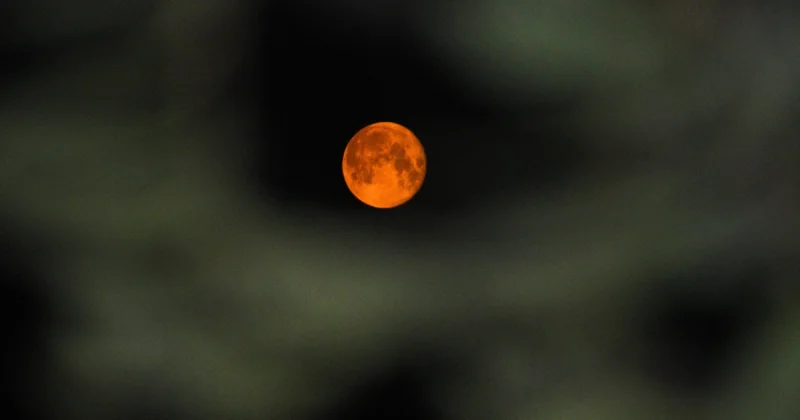
The Full Moon in Pisces arrives on August 28, 2026 at 12:18 a.m. ET, and with it comes the last near-total lunar eclipse readers will see until 2034. For anyone tracking the night sky, that makes this one of the few lunar events that can be marked on a calendar with real confidence and real distance from the next.
That is why searches for the New Moon rise now, even though the moment itself belongs to the Full Moon in Pisces. The eclipse is being treated as a rare hinge point: close enough to feel immediate, far enough out to make the wait for the next one matter. In other words, this is the kind of sky event people do not just watch; they count between one occurrence and the next.
The Sturgeon Moon name carries its own weight. It comes from Algonquian-speaking peoples of the Great Lakes and Lake Champlain region, where Ojibwe and other Anishinaabe communities marked August as the season when lake sturgeon moved into shallower water and could be caught in greatest abundance. The name sturgeon itself means “the stirrer,” which fits a moon that is described as stirring up what has settled in the psyche.

That idea is central to the way this eclipse is framed. Full Moons are treated as times for releasing, relinquishing and reflecting, and the August Full Moon in Pisces is cast as a moment for letting go. But the same reading warns that avoidance and denial do not make buried truths disappear; they only keep them buried longer. The Moon in Pisces sits directly opposite the Sun and Mercury in Virgo, while the Sun sits at the heart of Mercury in Virgo as a cazimi that is now separating, adding the sense of something intense passing through rather than settling quietly.
There is also a longer story behind the name on the moon. Lake sturgeon have inhabited North America’s waters for more than 200 million years, which gives the seasonal language around the Sturgeon Moon an older frame than the eclipse itself. It is a reminder that the moon’s meaning in this moment is not only about rarity in 2026, but about repetition, memory and the habits people carry into moments they hope will bring release.
What makes this one stand out is the combination of timing and scarcity. A near-total lunar eclipse is not a monthly feature, and this one is being presented as the last of its kind until 2034. That long gap gives August 28 a different feel from a routine Full Moon: it is both an ending and a pause, a night when the sky is said to pull loose what has settled, even if the things people want to avoid are the last ones likely to stay hidden.