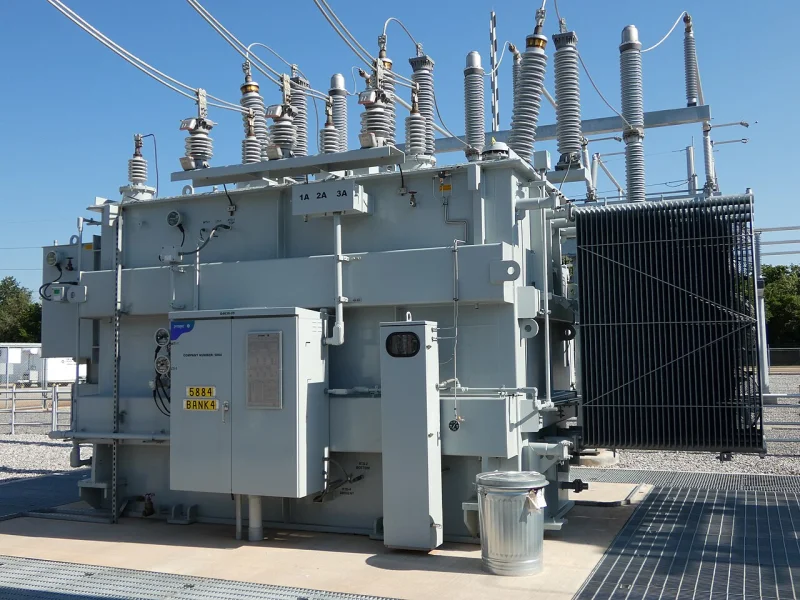
President Donald Trump issued an executive order restricting foreign-made electrical infrastructure across the United States bulk-power system, putting transformers, inverters, circuit breakers and other sensitive gear under new federal scrutiny. The order reaches equipment used in substations, power generation facilities and control rooms, and it also covers transmission lines rated at 69 kV or higher.
The move is landing now because the directive is already on the clock. It technically applies to transactions initiated after Aug. 26, 2026, and it gives the Department of Energy 120 days, until Dec. 24, 2026, to publish formal rules that will turn the policy into enforceable practice. DOE is also told to make recommendations to the National Security Council to isolate, monitor or replace sensitive infrastructure as soon as practicable.
Trump framed the order around concerns over remote access, cyber vulnerabilities and the risk of grid disruption. It extends to equipment designed, manufactured or supplied by vendors tied to 24 designated sanction- and arms-embargoed countries under U.S. International Traffic in Arms Regulations, with Iran, Russia and Syria among them. China is described as the primary commercial supplier affected across solar, battery and electrical component supply chains.
The immediate effect, though, is not an outright ban on every piece of foreign-made gear. The order creates a federal process that depends on DOE evaluating specific vendors and issuing formal risk determinations before restrictions are fully enforced. That leaves utilities, developers and asset owners waiting to learn which products will be flagged first, and whether the government will rely on a pre-qualified vendor white-list, a licensing framework or both.
That gap matters because the policy also opens the door to retroactive pressure on equipment already in service. Norton Rose Fulbright said the department could require owners to isolate, monitor or remove previously installed gear, but any such mandate would likely be phased in to preserve grid stability. For clean energy developers, the order adds another layer of compliance on top of Foreign Entity of Concern restrictions, domestic content rules, Section 45X manufacturing credits and import tariffs.
For now, the sharpest question is not whether Washington wants tighter control over the bulk-power system. It is how quickly DOE names the first vendors and how far the government is prepared to go once it starts tracing foreign equipment already inside the grid.