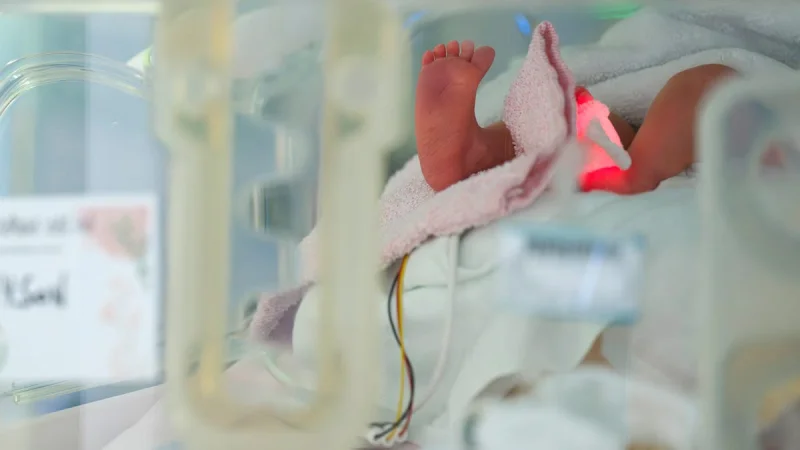
A newborn at the center of a Texas surrogacy fight is in critical condition after complex heart surgery, deepening a custody dispute that has already pulled Texas and California into court. The baby, known as Gabriel to surrogate McKenna West and Rumi to his biological parents, underwent a Norwood procedure and is now being closely monitored at a hospital in Texas.
The medical crisis gives the case immediate urgency because the child was already under court protection before birth. Court documents say the baby was diagnosed before birth with hypoplastic left heart syndrome, a rare congenital heart defect in which the left side of the heart does not develop normally, and West says she traveled from Alaska to Texas during the pregnancy after she refused to terminate it.
West was serving as a surrogate for California couple Nausheen Gilkar and Omar Ahmed when the diagnosis came. The pregnancy became a legal fight over medical decisions and custody, with Texas Attorney General Ken Paxton intervening before the baby was born in Dallas on Aug. 12. A Dallas County judge then issued an emergency order requiring hospitals to provide medically necessary care and preventing the baby from being removed from Texas while the case moved forward.

After the birth, Gilkar and Ahmed obtained a temporary restraining order that awarded them custody, according to the Texas Tribune. In their latest filing, they said the child had recently undergone the Norwood procedure, was experiencing serious medical developments, and had declined enough that doctors had to reintubate him. They also asked to delay a scheduled hearing because of his condition.
The filings leave the most important medical question unanswered: what exactly went wrong after the operation. The court papers do not spell out the specific complications or the boy’s current prognosis, only that he remains in critical condition and under care in Texas. The parents say the surrogacy agreement included an abortion clause and that they initially agreed to terminate the pregnancy after the diagnosis, but West later changed her mind and refused to have the abortion.
That conflict is now tied to the baby’s survival as much as to his custody. Surrogacy contracts can address what happens after a serious fetal diagnosis, but those provisions do not necessarily allow intended parents to force a termination. For now, the case turns on a newborn whose condition has worsened, a judge’s orders that still bind the dispute, and a hearing that may not go forward while doctors keep fighting for the child’s life.