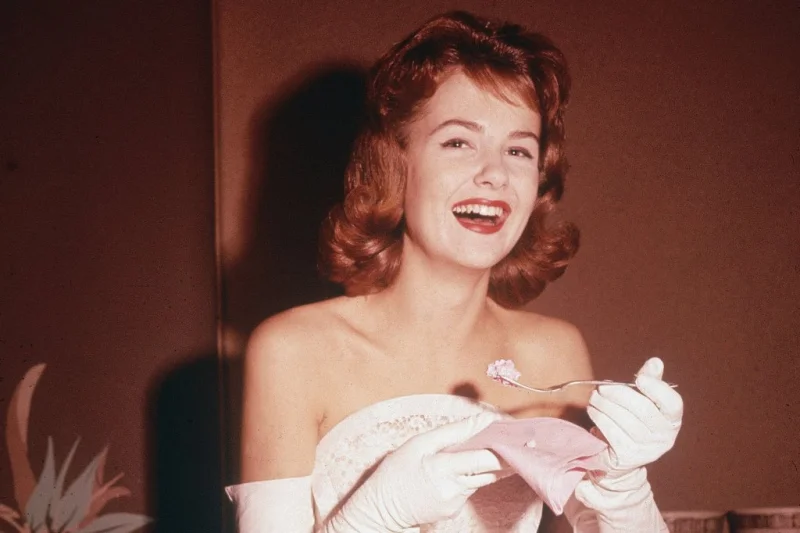
Shelley Fabares died Sunday, Aug. 23, in Los Angeles at 82, closing the life of the actress and singer whose voice carried "Johnny Angel" to No. 1 on the Billboard Hot 100 in April 1962. For many viewers, that song was the bridge between a familiar face on TV and a pop record that took off on its own.
The timing matters because the industry still measures that crossover in the same way it did then: by the song, the chart and the moment a television character became a hitmaker. Fabares recorded "Johnny Angel" in September 1961, when she was 17, and performed it as Mary Stone on The Donna Reed Show in the episode "Donna’s Prima Donna," which aired Feb. 1, 1962. By April, the record had climbed to No. 1.
Lyn Duddy and Lee Pockriss wrote the song, and the session brought in Darlene Love and the Blossoms on backup vocals, with Hal Blaine on drums, Carol Kaye on bass and Glen Campbell on guitar. The track was not a novelty on the margins; it was built like a real pop record, and it sounded like one. That helped make Fabares one of the clearest examples of a television performer crossing into the Billboard Hot 100 without losing the character that made her recognizable in the first place.

But the path to that hit was not one she was eager to take. During the 1961-62 season, Tony Owen decided that Fabares and Paul Petersen would record pop tunes to perform on the series, and she later pushed back in the moment, telling him, "Mr. Owen, Paul can do it." When he pressed her, she replied, "He can do anything." Asked whether she would sing, she answered, "Oh, yes, Mr. Owen. I do." Then came the instruction that changed her career: "Sing."
That decision fit a larger pattern on TV. The Donna Reed Show ran for eight seasons from 1958 to 1966, and it was part of the same era that helped turn Ricky Nelson into a pop star on The Adventures of Ozzie and Harriet, where "Poor Little Fool" and "Travelin’ Man" both reached No. 1 on the Hot 100. Fabares’ record belongs to that same early TV-to-pop pipeline, when a hit could begin in a living room scene and end on a chart.
What remains unresolved is not whether Fabares mattered. She did, and the numbers say so. The open question is what made her death come now into view for a new round of listeners and viewers: the voice behind "Johnny Angel" is gone, but the song still carries the story of how a reluctant 17-year-old became a No. 1 singer by accident, pressure and timing.