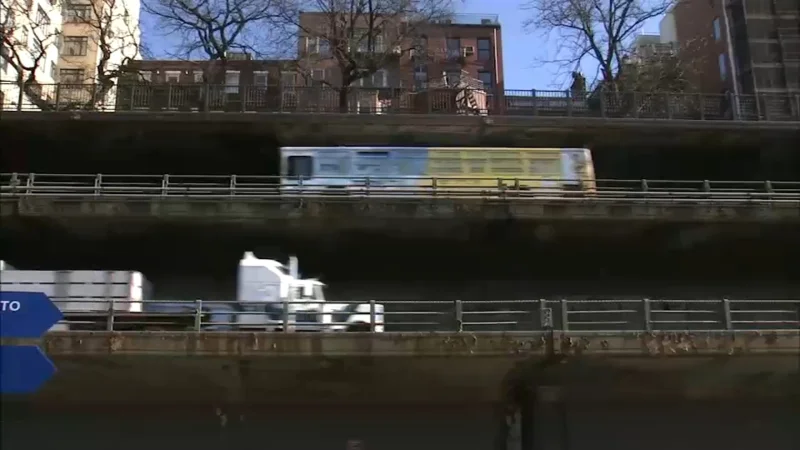
New York City on Monday unveiled a $4 billion plan to rehabilitate the Brooklyn-Queens Expressway, pairing major repairs with two temporary bypasses meant to keep traffic moving and preserve views from the Brooklyn Heights Promenade. Zohran Mamdani announced the proposal in a video and said the city was done waiting on one of its most severe infrastructure problems.
The plan matters now because the BQE carries roughly 130,000 vehicles a day and the city says the work could add about 40 years to the roadway's life. Mamdani said the approach would let New York City fix the current problem without slowing the city down or spending decades more as the roadway worsens. He also said the project would not be easy and would not be quick, but that the wait had gone on long enough.
The repair target is the deteriorating triple cantilever section that has been the focus of debate for years. Under the proposal, the city would build a temporary two-level bypass below the Brooklyn Heights Promenade while crews work on the stretch between Atlantic Avenue and Sands Street. A second temporary bypass would extend from Columbia Heights over the Brooklyn Bridge approach to the Manhattan Bridge, a design that keeps the Promenade's sightlines in place even as construction moves close to the area people are trying to protect.

That is the tradeoff at the center of the plan. The city says it can preserve the view from the Brooklyn Heights Promenade, but the only way to do that is to build major temporary bypasses below and near it. The promise is a cleaner roadway with less disruption over time; the cost is a long and complicated build that will change how that part of Brooklyn looks and moves for years before any lasting fix is finished.
The Department of Transportation will now begin environmental review and community outreach, with informational sessions and public scoping expected before an Environmental Impact Statement is issued in the summer of 2028. City officials say construction would begin in 2030 and take about 10 years, a timeline that makes clear the project is not a quick patch but a long reconstruction meant to buy the BQE another generation.
The unresolved question is not whether the road needs repair. It does. The question is whether New York City can build the bypasses, clear the review process and keep the BQE functioning during a decade of construction without the temporary fix becoming its own source of delay.