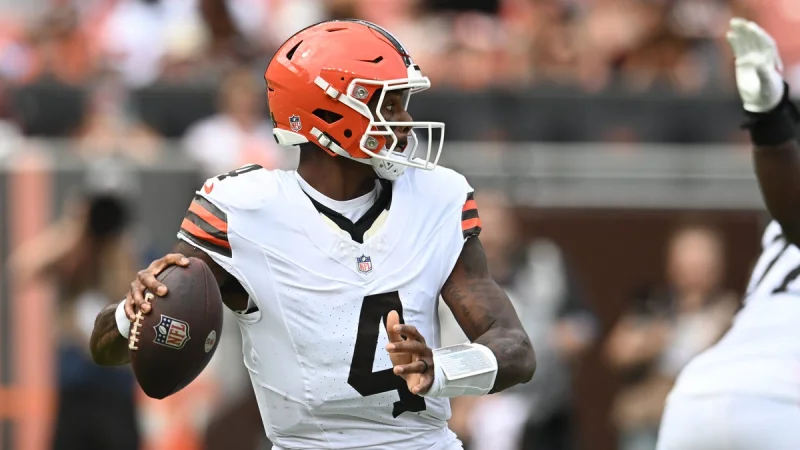
Jahmyr Gibbs signed a three-year, $67.5 million extension this month and became the highest-paid running back in NFL history. The deal averages $22.5 million per year, a new benchmark for a position that has spent decades fighting for more respect and more money.
He was speaking after a recent camp practice at the Lions headquarters in Allen Park, Mich., when the scale of the contract came into focus. Gibbs is the person living the headline now, and the reason people are searching his name today is simple: his extension changed the running back market in real time, even if it did not change the rest of the league with it.
Gibbs said he does not think pay should be tied to position. He said it should come down to value, asking what a player means to that team. He also pointed to the short shelf life at the position, saying the running back lifespan in the NFL is what, three or four years. Even so, he argued that elite backs still were paid less than players at other spots despite doing a lot for a team.
The numbers show why that point still lands. Gibbs’s extension was the third running back contract of the summer to average at least $22 million, and it pushed him past Bijan Robinson’s three-year, $66.75 million deal and Jonathan Taylor’s two-year, $44 million extension. Saquon Barkley is in the $20-million-plus running back club, and Christian McCaffrey is listed at $19 million per year. Brad Holmes said the new contracts with Gibbs, Bijan and Jonathan Taylor are starting to creep up there, but they are not there yet.
That gap is still the story. Spotrac.com rankings show 24 wide receivers average more on their contracts than Gibbs does, including Drake London at $35.26 million and Zay Flowers at $35 million per year. Flowers’s average more than doubles Derrick Henry’s $15 million, which is the kind of comparison that keeps the running back market in perspective even after a record-setting extension.
That is the friction in Gibbs’s breakthrough: he now sits at the top of a position that still trails several others by a wide margin. The contract is a milestone, but it also shows how far running backs still have to climb before one record turns into a market shift.