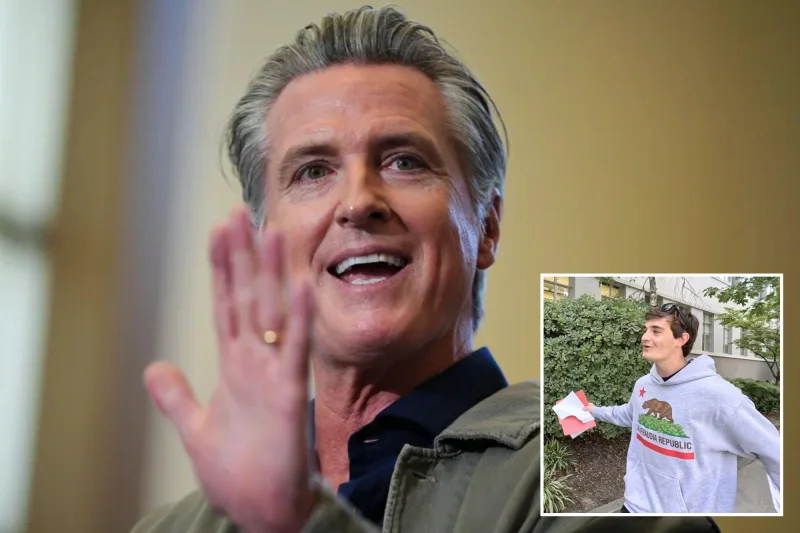
Gov. Gavin Newsom signed the Stop Nick Shirley Act into law on Saturday, expanding California’s Safe at Home program to include employees of nonprofits that serve people navigating the immigration system. The measure, Assembly Bill 2624, adds a new class of workers to a program that already shields domestic violence survivors, elder abuse victims and some reproductive and gender-affirming health care workers with substitute mailing addresses.
The law matters now because the fight over it has moved from committee rooms to the statehouse and onto the sidewalk outside the California State Capitol in Sacramento. Republicans branded it the Stop Nick Shirley Act, a nickname coined by Assemblyman Carl DeMaio, after Nick Shirley, an independent journalist and YouTuber, built an audience with videos following immigrant workers and accusing them of fraud.
Democratic Assemblywoman Mia Bonta introduced the bill in February after reports of increased threats and harassment against immigration service providers. She said, “Our immigrant service providers are living in fear because of extremists looking to demonize the work that they do and the populations they serve.” She added that it was “an intolerable consequence of the anti-immigrant rhetoric that exists right now.” Supporters say the expansion is meant to protect people who are considered especially vulnerable to targeted attacks and violent threats, not to rewrite how the immigration debate is covered.

That is where the bill’s politics sharpen. Shirley said the measure was created after he “exposed widespread fraud in immigrant communities” in California and Minnesota, and he traveled to San Diego after the viral success of videos he produced about Minnesota. Newsom also said in February that Somali daycare providers in Minnesota were “under siege” following Shirley’s arrival. The competing accounts give the law two very different purposes: one sees a shield for workers under pressure, the other sees a response to reporting that made lawmakers uncomfortable.
The controversy intensified on Wednesday, when Shirley was conducting a sidewalk interview outside the California State Capitol in Sacramento and Terry Schanz allegedly barged into the encounter. Schanz, the chief of staff to Democratic Assemblywoman Tina McKinnor, held up a printed flyer and asked, “Did you guys hear that Nick Shirley has a small penis allegedly?” Multiple complaints have since been filed with the California Legislature’s HR department, and Schanz is expected to face consequences.
For now, the signature settles one part of the fight: California has widened Safe at Home again, this time to cover some nonprofit immigration workers. What it has not settled is whether the program will become a routine protection for that workforce, or remain a symbol in a broader struggle over immigration reporting, harassment and how far elected officials should go when the subject of that reporting gets under their skin.