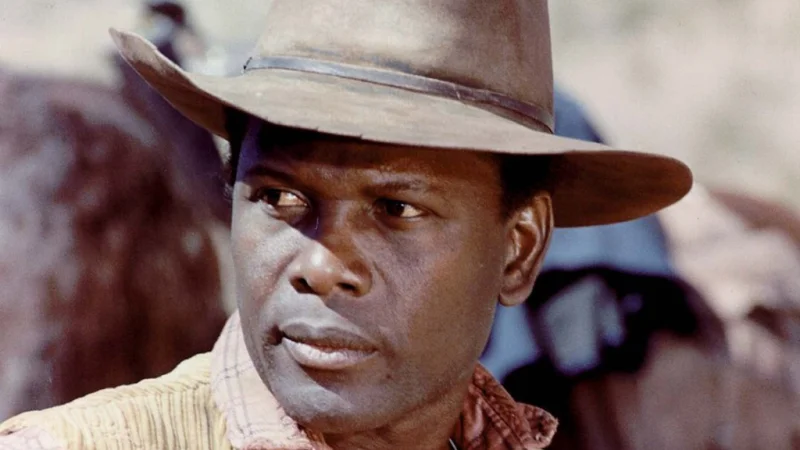
Sidney Poitier changed the Western in 1972. With Buck and the Preacher, he made his directorial debut, starred as Buck, a wagon master, and became the first Black director of a Western for a major studio.
The film arrived with Black actors at the center of a genre that had long pushed Black experience to the margins. Poitier set the story in the late 1860s, after the Civil War, and made Buck the guide for former slaves traveling westward from Louisiana. Harry Belafo played the Preacher, and the story placed Black characters in conflict with white marauders while also showing Black cowboys forming an alliance with Native Americans.
That was the point. Buck and the Preacher was not trying to replay the old Western formula. It was built as a revisionist Western, with elements of Blaxploitation, and it carried a Black perspective on both the genre and modern day politics. In a form built on simple moral lines, Poitier used the camera to complicate who got to claim the frontier and who was usually left out of the frame.

But the film’s importance does not begin in 1972 from a blank slate. Black actors had already appeared in Westerns since the 1920s, and Bill Pickett was among the earliest, starring in the silent films The Bull-Dogger and The Crimson Skull. Harlem Rides The Range came in 1939 and showed Black cowboys for segregated audiences. Woody Strode later played the title soldier in Sergeant Rutledge in 1960 and appeared as a gunslinger in Once Upon a Time in the West. The genre had room for Black presence, just not much room for Black authorship at the studio level.
That is where Poitier’s move mattered most. He fired Joseph Sargent and then stood in for him, taking over a production that needed a new center of gravity. The result was a film that said the Western could be told from a Black point of view without asking permission. It also arrived at a moment when the racial issues inside the story still echoed through the United States.
Reception is the open question now, and the film’s place in the record is easier to settle than its first response. Poitier’s debut made him the first Black director of a studio Western, and that remains the sharpest way to understand why Buck and the Preacher still stands out: it did not invent Black participation in the Western, but it did force the genre to recognize Black leadership behind the camera.