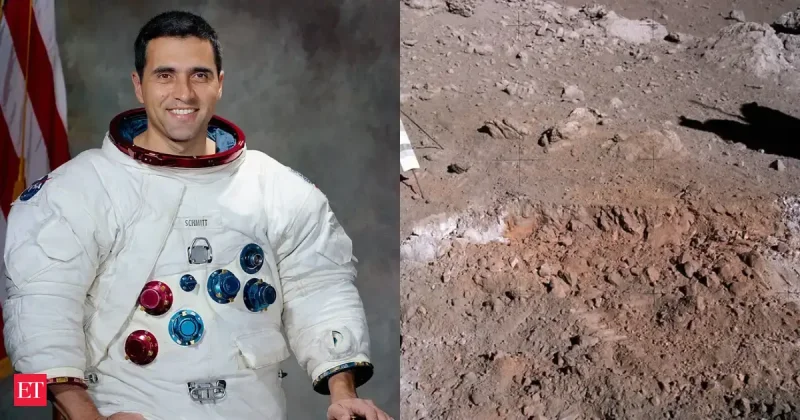
When Harrison "Jack" Schmitt shouted, "There is orange soil!" at Shorty Crater during Apollo 17 in 1972, he had stumbled onto material that would later change how scientists thought about the Moon’s volcanic past. What looked like dirt was really thousands of tiny glass beads, formed in an ancient lunar fire fountain.
The reason readers still search for Apollo 15 now is simple: the earlier mission had already brought back tiny green glass beads in 1971, and together the two sample sets gave researchers a clearer picture of how the Moon once erupted. The orange beads from Apollo 17 did not sit on the surface as ordinary soil; they were evidence of violent volcanic activity frozen into microscopic glass.

That is what gives the find its weight today. Contemporary studies of the Apollo 17 samples have uncovered hidden details about past lunar eruptions, showing that the Moon’s volcanic history was more active and more varied than the eye could tell from the surface. The same samples are also being used to probe the possible presence of water ice deposits on the Moon, a reminder that a handful of grains can still reshape a big scientific question.
The friction is in the appearance. Schmitt saw orange soil and called it out like something from Earth, but the sample was never ordinary dirt at all. It was thousands of tiny glass beads, each one a record of molten material thrown up in a lunar fire fountain and cooled before it could become anything else. That gap between what the astronauts saw and what the labs later proved is why the sample still matters.
The next step is not another dramatic landing callout but continued study. Apollo 17’s orange beads remain useful because they tie one vivid moment at Shorty Crater to two larger questions: how the Moon erupted long ago, and whether some of its hidden deposits may include water ice. The shout was brief; the science has kept going for decades.