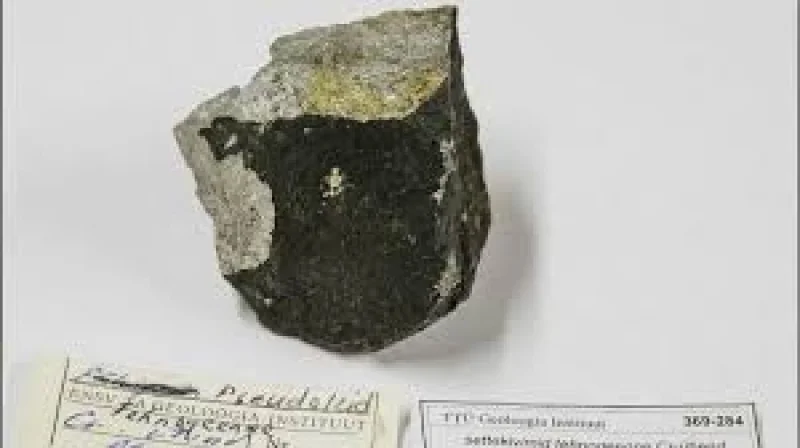
Dr. Beatriz Villarroel and Dennis Åsberg went back to a quiet Tallinn suburb this week to look for what is still buried under a garden where something metallic first turned up in 1969. They found no one at the door, but the neighbor who had watched the site from his window spoke with them for an hour, a conversation recorded for Secret Soviet UFOs.
The visit matters because the mystery has never really left the ground. The Soviets spent the next twenty years trying to get the object out, bringing in excavators, scientists and the military, and even borrowing the house from its owners so they could live there during the effort. Digging continued on and off until perestroika ended it, leaving behind a claim that has outlived the state that pursued it.
Villarroel did not come to Estonia on a whim. She walks through peer-reviewed work that brought her there, including the question of highly reflective objects photographed in orbit years before anyone on Earth had launched a satellite. Åsberg links Merivälja to the Baltic Sea anomaly his team found on sonar roughly 300 kilometers away, and he argues that both places could predate the last ice age.
That is the larger frame, but the encounter at the yard also exposes the narrow point where curiosity stops and evidence begins. Between them, Villarroel and Åsberg count five European cases, yet they will not give up the coordinates of one of them. The only thing that would settle what remains under the garden is ground-penetrating radar, and the man at the property has already told them no.
So the story is not whether the mystery has become more elaborate. It is whether a site that drew excavators, scientists and the military for twenty years can still be examined at all, or whether Merivälja remains one of those questions that survives because nobody can make the next test happen.