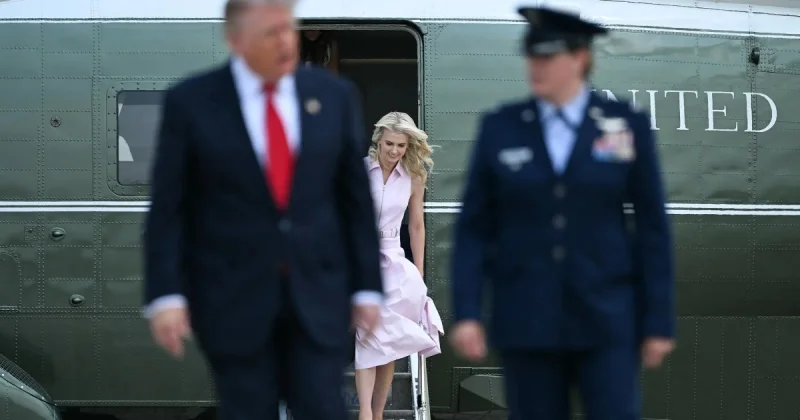
Natalie Harp spent more than a year in the White House without completing the routine security clearance that most West Wing staffers need, then filled out the paperwork in recent months and received the clearance. The change came only after pressure inside the White House mounted and Donald Trump stepped in.
Harp holds the titles special assistant to the president and executive assistant to the president, and her access had become a concern because she operated unusually close to Trump. One senior White House official said she was given multiple extensions to finish the forms, yet she declined more than once to do it. The form in question, the SF-86, is the standard document that begins a federal background investigation and asks about past residences, finances and foreign contacts.
That delay drew attention because Harp is not a distant aide. She is known inside the West Wing as a gatekeeper who filters what reaches Trump, and a national security official said her proximity to him in the West Wing and his residence gives her access to some of the most sensitive information around him. Three people said the Secret Service raised internal security concerns during Trump’s first year back in office, with some of the worry focused on Harp’s unbridled access and some on her failure to obtain a clearance at all.
The White House tried to flatten the issue. Karoline Leavitt said Harp has a security clearance like everyone else and described her as loyal and hardworking. That line sits uneasily beside the fact that Harp did not complete the clearance process for more than a year after returning to the White House, only doing so after internal objections grew and Trump intervened.
What remains unanswered is simple: why Harp kept turning down the paperwork for so long. The clearance issue is no longer a gap on the page, but it leaves the larger question untouched about how much of Trump’s information flow can be handled by someone who was allowed to work so closely to him before the standard check was in place.