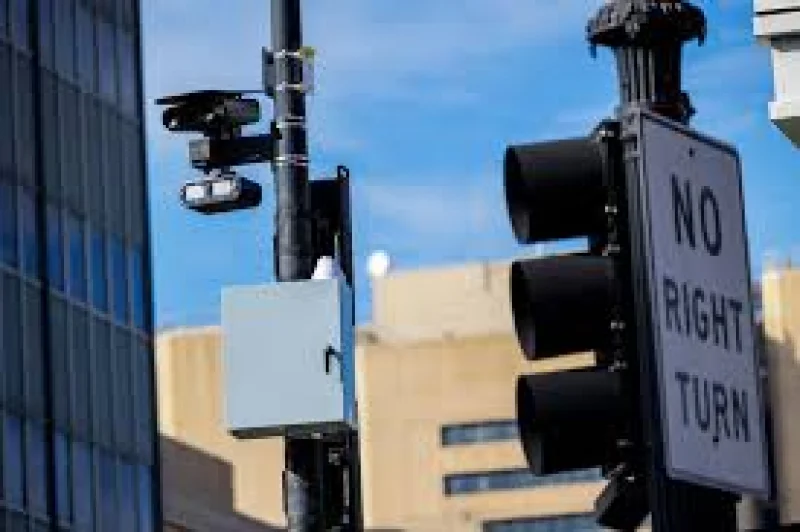
Oakland’s new speed cameras have recorded 526,324 speeding violations since Jan. 14, and city measurements show average speeds at the monitored locations fell by 3 mph by summer 2026. The early numbers give the city its clearest look yet at a program aimed at some of the streets with the worst crash histories.
Josh Rowan said he was “quite ecstatic” about the preliminary results, and with good reason. From Jan. 14 through July 15, Oakland issued 193,508 citations and 332,816 warnings, meaning the cameras generated more than half a million enforcement events across 18 locations. Drivers caught for the first time traveling between 11 and 15 mph over the speed limit got warnings; after the trial period ended March 15, civil citations started for drivers going at least 11 mph over. On average, the vehicles that drew warnings or citations were going 14 mph over posted limits.
The city measured the change separately from the camera system, using pneumatic roadway tubes to compare summer 2024 with summer 2026. That matters because the data shows speed fell at the camera sites, but it does not prove the cameras alone caused the drop. Traffic can slow for other reasons, and the city’s own numbers do not isolate the effect of enforcement from broader changes in driver behavior.

Still, some locations stand out. The biggest decline came along Hegenberger Road between Spencer and Hawley streets, where the city said speeds fell 10 mph for 85% of vehicles between summer 2024 and summer 2026. Speeds dropped by 6 mph along Seventh Street between Adeline and Linden streets and by 6 mph along 73rd Avenue between Fresno Street and Krause Avenue. Oakland also said 33,450 citations were issued along 73rd Avenue, 25,823 along Broadway between 27th and 28th streets, and 21,928 along Hegenberger Road.
The reach of the program has gone well beyond Oakland drivers. The city said 58% of citations went to vehicle owners with registered addresses outside Oakland, and nearly 1,300 unique license plates drew more than 10 citations. Eleven plates received more than 100 citations. That points to a small group of repeat violators and a program that is already reshaping behavior on roads where speed had been a routine problem.
There is one hole in the story the city has not filled in yet: revenue. Oakland has not released data showing how much money the citations brought in, and a staffing shortage at Verra Mobility disrupted processing from mid-May through mid-June, leaving few or no violations processed on several days. Rowan said reintroducing red light cameras is “in the pipeline for us to start analyzing,” which suggests the camera program is still in its early phase, even after a strong first reading. The next question is whether Oakland treats these numbers as proof of a lasting shift, or as the first step in a larger enforcement overhaul.