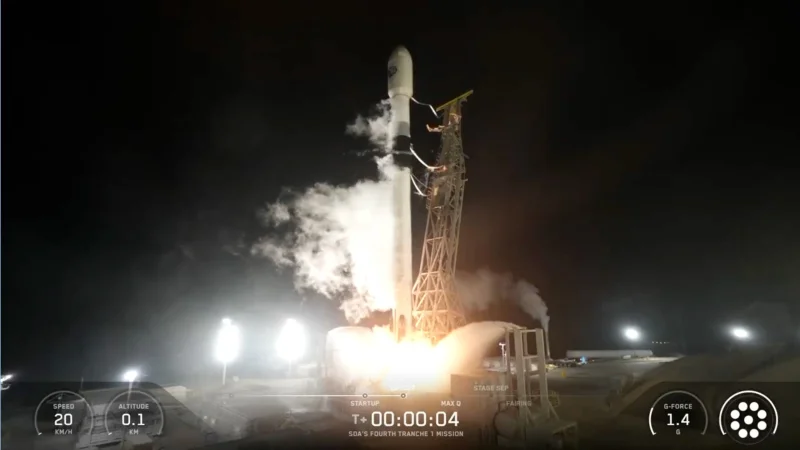
SpaceX launched 21 data satellites for the Space Development Agency from Vandenberg Space Force Base early Saturday, ending a five-day wait that began when the first attempt was halted with 58 seconds left on the clock. The Falcon 9 lifted off at 12:39 a.m. PDT and sent the mission south from Space Launch Complex 4E.
For the Space Development Agency, the Vandenberg launch mattered because it added another slice to a network built for the U.S. military. The mission, dubbed Tranche 1 Transport Layer A, is the fourth production satellite launch for the agency and part of the broader Proliferated Warfighter Space Architecture. SpaceX said the vehicle had been lowered to a horizontal position for troubleshooting after the Oct. 5 auto-abort, which it linked to some off-nominal data on Stage Two.

That extra time was not just about one rocket. Atticus Vadera said the week allowed for double checks on vehicle systems and range deconfliction, a nod to the kind of scheduling friction that can stall a launch even when the spacecraft itself is ready. The delay was repeated day by day before the count finally held long enough for liftoff.
The mission also pushed the constellation further along. With this launch, 63 satellites are now in orbit across the three launches completed to date, and Tranche 1 is expected to begin providing operational capabilities to the Department of Defense beginning in 2027. When complete, the layer will total 126 Transport Layer satellites, 28 Tracking Layer satellites and four missile defense demonstration spacecraft.
SpaceX flew the mission with first stage booster B1103, on its sixth flight, and landed it at Landing Zone 4 about 7.5 minutes after liftoff. That marked the 37th landing at LZ-4 and the 668th Falcon booster landing overall, a reminder that the same company building the network is also keeping its reuse cadence moving while it does it. The unresolved question is not whether this launch worked; it is how quickly the rest of Tranche 1 can keep pace once the next window opens.