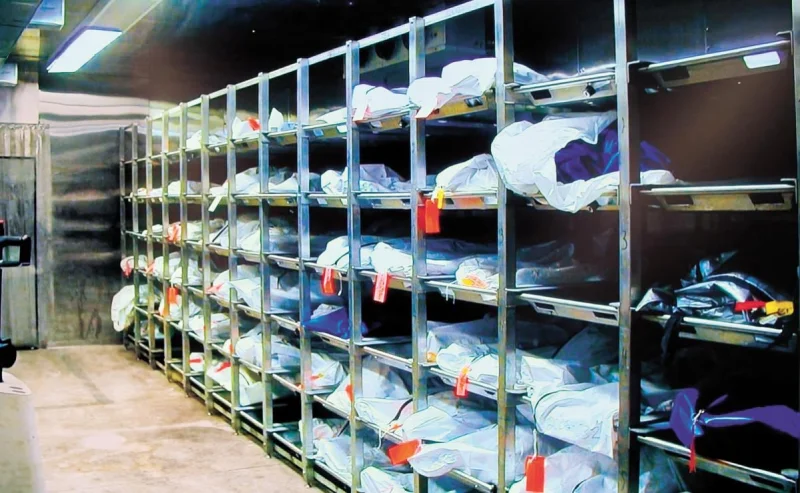
Pima County’s medical examiner has taken in 2,014 bodies of Mexican nationals recovered in Tucson, Arizona, after people tried to cross the border illegally from 2000 to 2025. Two more bodies were sent there for identification, underscoring how the count of the dead keeps growing even as families search for answers.
Gregory Hess said the numbers have climbed for years. He said there were 20 or fewer body stays in cold storage in 1993, fewer than 70 a year in 2000 and 2001, and then 147 to 200 bodies in the morgue refrigerators from 2002 to 2005, forcing staff to adapt outside containers when storage ran out. The backlog now stretches far beyond one nationality: the same period also brought 447 bodies of Guatemalans, 82 of Hondurans, 75 of Salvadorans, 23 of Ecuadorians, eight of Peruvians, six of Brazilians, six of Colombians, four of Costa Ricans, four of Indians, three of Dominicans, two of Venezuelans, two of Nicaraguans and one of a Chilean.
That is why the keyword is drawing attention now. The Office of the Medical Examiner of Pima County is not just holding the remains; it is trying to identify them while they are still in storage, or among ashes kept with others in the patio of the identification center. The work depends on data shared with Mexico and on information exchanged with consulates in cities, because desert deaths often leave little behind except a body in bad condition and a family waiting across a border.

The office uses more than DNA and teeth. Tattoos and distinctive marks can point to a name. Families have identified relatives by silver inlaid teeth, a metal plate, or body deformities. Contacts found in cell phones can also help. But the process is slowed by fear as much as by distance: some families refuse calls from authorities because they fear extortion or do not believe the calls are real. That leaves many cases open even when the clues are in hand.
The numbers also show a demographic pattern that fits the desert’s cruelty. Hess said most of the bodies are men, accounting for 87 percent, while women make up 17 percent of the total, a split that does not mathematically reach 100 percent and likely reflects overlap or reporting in the underlying tally. The most common ages are 20 to 29, followed by 30 to 39, but the office has also handled bodies and remains of children under 13 and people 50 to 59, with very few elderly people among them.
What remains unresolved is the part families care about most: how many of the 2,014 Mexican bodies have actually been identified and returned. The count of the dead is clear. The count of the named is not, and until it is, the morgue in Tucson will keep standing in for a border that has already taken too many lives.