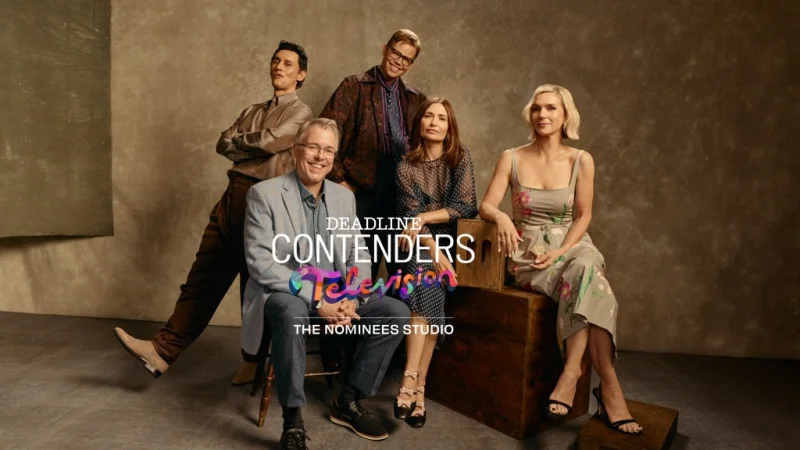
Rhea Seehorn says Pluribus is the first series in which she has carried the lead, and the response has already followed her into grocery stores. Fans have been calling her “Carol” in passing, a sign that Vince Gilligan’s latest project is landing as more than another prestige-drama launch.
That reaction matters because Pluribus is not built like a conventional science fiction series. Gilligan has described it as a genre-breaking drama about a global virus that has left almost all of humanity in a hive mentality of shared bliss, with Seehorn playing Carol, a novelist trying to save the world from newfound happiness. The show and its cast have also picked up 18 Emmy nominations, giving the rollout awards-season weight as viewers start sorting out what the series is really saying.
Seehorn said the series has already sparked unusually wide-ranging talk, moving from comedy to deep psychological drama in the same conversation. That fits the show’s premise, which is simple on the surface and slippery underneath: if nearly everyone is united in bliss, the drama comes from the person who refuses to accept it. In that sense, the story is less about a virus than about control, consent and what happens when comfort becomes the threat.

Gilligan said he came up with the idea for Pluribus 10 years ago and has been refining it ever since, but he also said the Carol role was originally imagined as a man before he started writing it with Seehorn in mind. That shift turned the part into a very specific showcase for her, after she spent years in Breaking Bad and Better Call Saul universe work without fronting a series in the same way. It also explains why the character feels built around a particular kind of wit and resistance rather than around a generic lead figure.
There is still a familiar Gilligan paradox at the center of all this. He said he learned the hard way that he once tried to tell viewers exactly what Breaking Bad meant, only to realize that was a mistake, and now he wants the people who watched the show to tell him what it means. He even said he prefers other people’s interpretations because he cannot see the forest for the trees while making it. That leaves Pluribus open to readings about AI, immigration, the pandemic and whatever else viewers bring to it, which is exactly the point and also the risk: the more interpretations it invites, the harder it becomes to pin down one official answer.
For Seehorn, that ambiguity is part of the appeal. She said fans have been amazing, and that the “Hello, Carol” moments have made the role feel real in public. The next question is not whether people will keep watching for clues, but whether Pluribus can hold onto that freedom-to-interpret energy without losing the emotional center that Seehorn says has already made it feel like a show made “to the best of our abilities.”
Read more: Yellowstone expands again with Marshals as Rhea Seehorn weighs in